Why Does My Area Rug Smell Musty? And How to Get the Smell Out
Musty smell in your area rug? Learn what causes mildew odor, a step-by-step fix that works at home, and when an Atlanta rug needs a professional wash.
Read MoreFree Pickup & Delivery (8' x 10'+, Metro Atlanta) | 15% Off Drop-Off Service
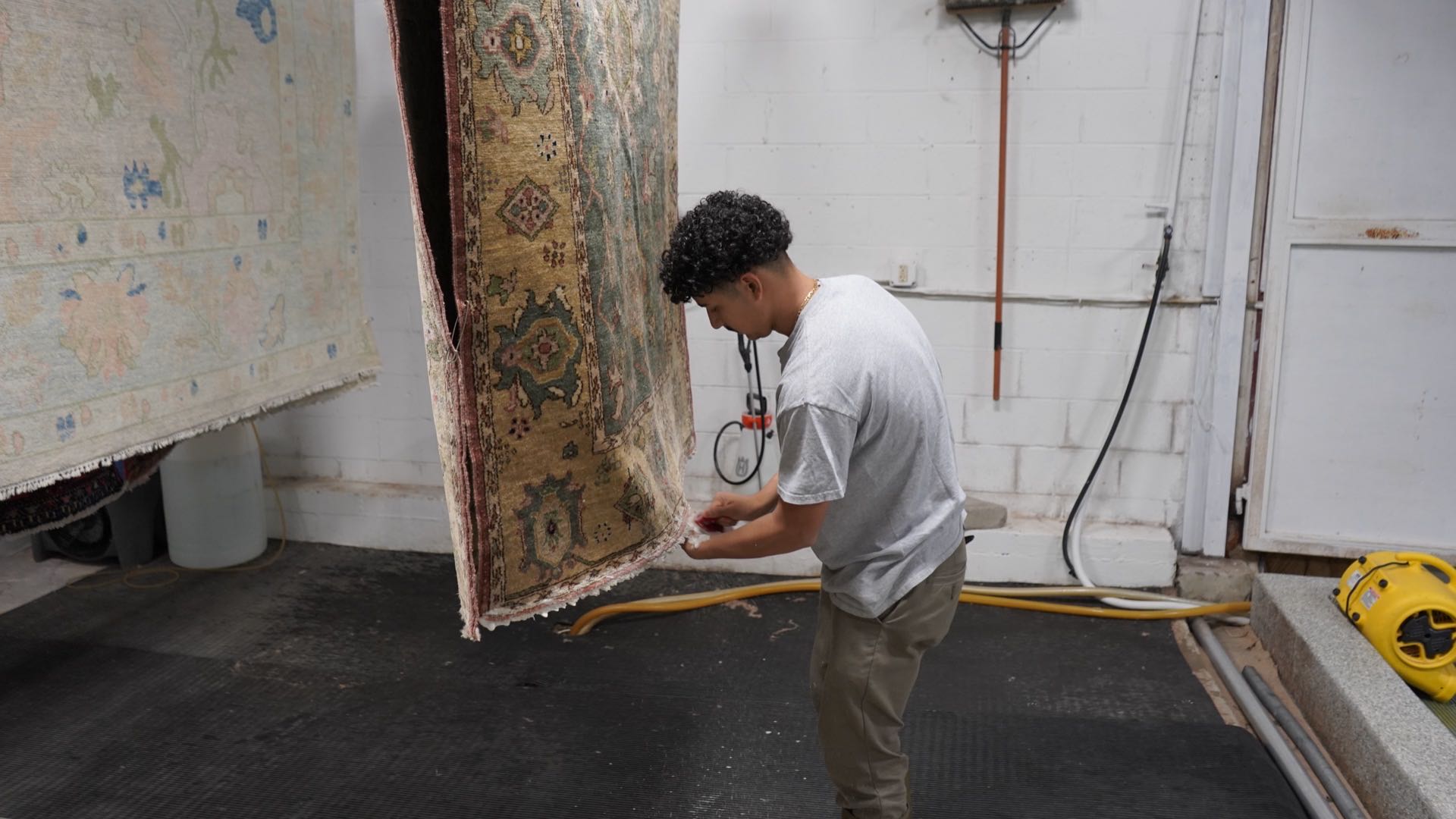
Wool is tough underfoot and surprisingly fragile in a bucket. Heat, harsh cleaners, and slow drying are what actually ruin wool rugs.
Wool is the most forgiving rug fiber you can own — right up until you clean it wrong. It resists soil, hides dirt, and springs back from decades of foot traffic. But wool is a protein fiber, closer to human hair than to cotton. Hot water, aggressive scrubbing, and the wrong detergent can shrink it, felt the pile into a matted crust, or pull the dyes loose in a single afternoon.
The good news is that safe wool rug cleaning at home is simple. It is mostly about what you don't do. This guide covers correct vacuuming, safe spot cleaning, the mistakes that cause permanent damage, and what a full professional wash actually involves — so you know which jobs you can handle and which ones need a rug plant.
A wool rug needs a full immersion wash every one to three years, depending on traffic and pets. Call (404) 355-2126 or request a free quote — pickup and delivery are free in metro Atlanta for rugs 8'x10' and larger.
Wool is a protein fiber covered in microscopic overlapping scales, plus a natural waxy oil called lanolin. Those two features explain almost everything about how a wool rug behaves when you clean it.
When wool gets hot and wet, those surface scales open and lock together. Add scrubbing or machine agitation and the fibers mat permanently. That is felting, and it is the same process used to make felt on purpose. A felted wool rug looks shrunken, feels stiff, and cannot be reversed. This is why cool water is the rule.
Lanolin is why wool repels spills for a few seconds before absorbing them. Harsh alkaline cleaners — dish soap, laundry detergent, most all-purpose sprays — dissolve it. The rug then soils faster than it did before you cleaned it. Wool-safe products are formulated near neutral pH to leave that oil intact.
Many hand-knotted and hand-tufted wool rugs use dyes that release in water, especially reds and deep blues. That bleeding is called color run, and it spreads wherever the water travels. Professional cleaners spot test every color before any liquid touches the rug. If a run does happen, our color run removal service can often lift the migrated dye back out.
Wool can absorb roughly a third of its own weight in moisture before it even feels damp. A soaked 9'x12' rug can gain well over a hundred pounds. That water sits in the foundation, and in Atlanta's humidity it dries slowly enough for mildew and dry rot to start.
Compare that with plant fibers, which must be cleaned dry — see our jute and sisal rug guide — or with silk, which is even more delicate and covered in our silk rug cleaning guide. Fiber decides method. If you are not sure what you own, our guide to identifying rug materials and construction walks through the simple tests.
This routine handles surface soil and keeps a wool rug looking good between professional washes. Set aside an hour and work in order.
Turn the beater bar off or raise the height setting as far as it goes. A spinning brush yanks wool loops out of the pile and chews up fringe. Run the vacuum in the direction the pile lies — brush the surface with your hand and you will feel which way is smooth. Do this once a week in traffic areas.
Grit works down through the pile and settles against the foundation. There it acts like sandpaper every time someone walks across. Vacuuming the back once a month loosens that grit so it drops out. Vacuum the floor underneath too, then flip the rug face-up again.
If you can lift it, take it outside on a dry day. Drape it over a railing face-down and tap the back with a broom handle. The amount of fine dust that falls out is genuinely startling. This is a home version of the dusting step every professional wash starts with.
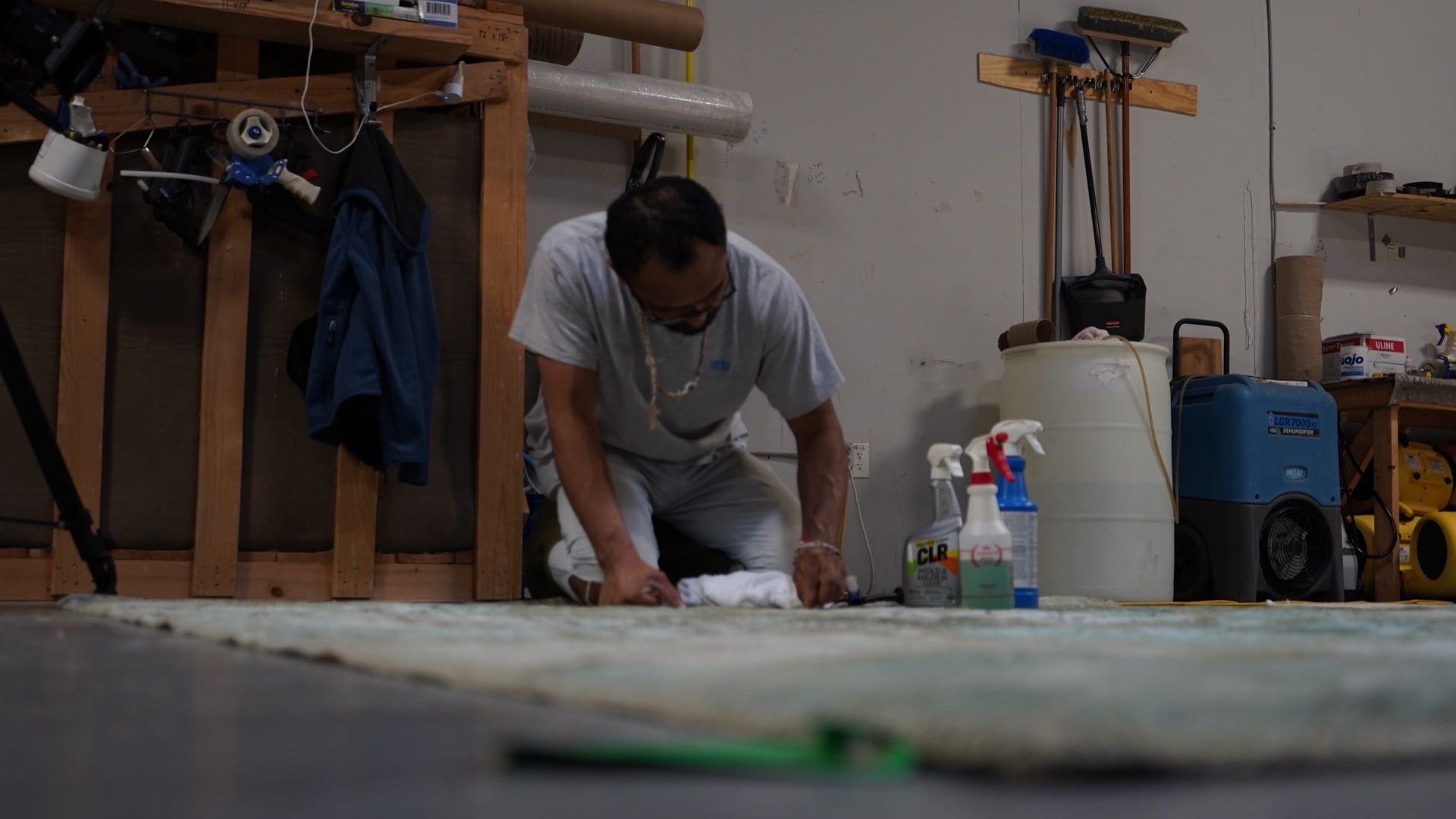
Mix a capful of pH-neutral wool detergent into a quart of cool water. Dampen a white cloth, press it on a hidden corner of each color, and hold for thirty seconds. If any dye transfers to the cloth, stop. That rug needs professional handling, not a home spot test.
Whip the solution until you have suds, then apply only the foam with a soft brush or sponge. Foam carries cleaning power with very little moisture. Work in small sections, always with the pile direction. Wipe each section with a cloth wrung out in clean cool water to rinse.
Blot up all the moisture you can with towels. Then get air moving across both sides with fans, and run a dehumidifier if you have one. Keep the rug off carpet and away from direct sunlight, which fades wool dyes. Our guide to drying a rug after washing covers the airflow setup in detail.
A rug pad makes every one of these steps easier. It cushions the foundation, lets air circulate underneath, and stops the rug sliding while you work. See our guide to rug pad benefits, and we cut custom padding to any rug's exact size.
Lanolin buys you a short head start on most spills. Use it. Move within the first minute and the majority of accidents never become stains at all.
Skip the internet remedies that get recommended for synthetics. Hydrogen peroxide, oxygen bleach, and detergents with optical brighteners all lighten wool dyes. Baking soda left in the pile is abrasive and hard to vacuum out completely. And enzymatic cleaners, which digest protein, will attack the wool itself if they sit too long — use them only on pet accidents, sparingly, and rinse.
Two stain types deserve their own playbook. For tannin stains, see removing red wine and coffee stains from area rugs. For pet accidents, the odor lives in the foundation where blotting cannot reach, which is why professional pet urine and odor removal flushes the rug rather than treating the surface.
Nearly every damaged wool rug that arrives at our plant was hurt by one of these seven things. Most of the damage happened in under an hour.
Steam cleaning comes up often enough that we wrote a full answer: is it safe to steam clean Oriental rugs? The short version is that hot water extraction cleans the top of the pile and leaves the rest of the soil where it is.
Home cleaning reaches the top third of a wool pile. Everything below that — the grit, the dander, the old spills that dried into the foundation — comes out only with a full immersion wash.
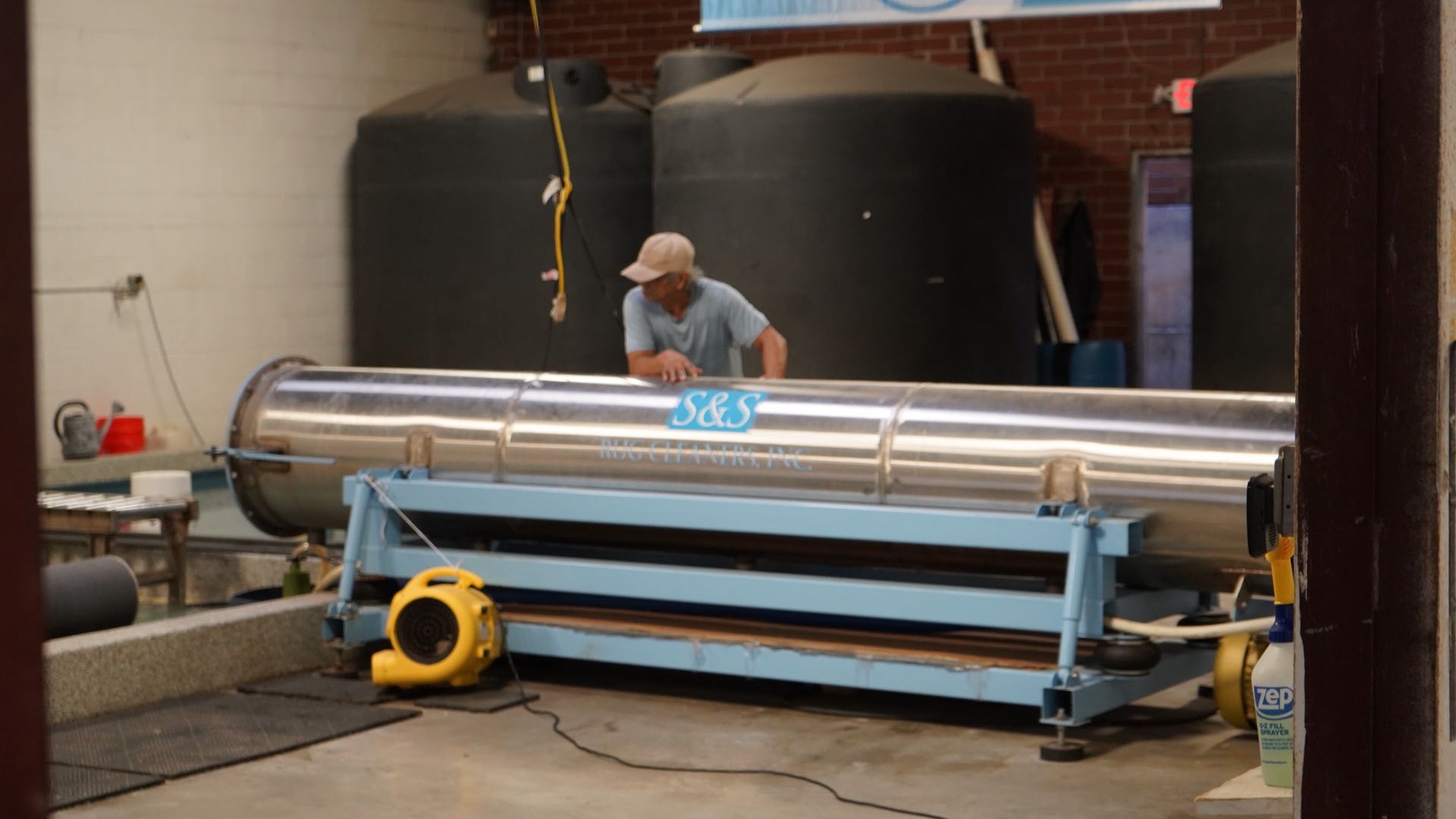
Mechanical extraction pulls water out in minutes, so a wool rug never sits damp long enough for mildew to start.
| Stage | What Happens | Why It Matters |
|---|---|---|
| Inspection & dye test | Fiber and construction identified; every color tested for bleeding | Decides the whole method and prevents color run |
| Dusting | Dry soil vibrated and beaten out before water is introduced | Pounds of grit come out; wet grit turns to mud |
| Immersion wash | Cool water and wool-safe shampoo worked through by hand | Cleans the full depth of the pile and foundation |
| Rinse & extraction | Repeated clean-water rinses, then mechanical wringing | Removes residue so the rug doesn't resoil quickly |
| Controlled drying | Hung flat in a climate-controlled room with moving air | Fast drying stops mildew, odor, and dry rot |
| Grooming & final check | Pile brushed back into direction; fringe finished | Restores the original look and catches missed spots |
You can see each step of our rug cleaning process in detail. Most wool rugs need this every one to three years — sooner with pets, kids, or an entryway location. Our guide to how often to clean rugs in Atlanta gives a schedule by room and household.
A wash is also the right moment to handle everything else. Worn edges and loose fringe get addressed through rug repair and restoration, moth activity through moth removal and prevention, and future spills through MicroSeal fiber protection. If cost is the question, our Atlanta rug cleaning cost guide explains how pricing works by square foot and fiber.
Keep it cool, keep it gentle, and dry it fast. Vacuum weekly with the beater bar off, blot spills with cool water and a pH-neutral wool detergent, and never let heat or a scrub brush near the pile. Handled that way, a good wool rug outlives the room it was bought for.
When it is time for a real wash, we pick up and deliver free anywhere in metro Atlanta for rugs 8'x10' and larger — see how pickup and delivery works — and drop-off customers save 15%. Call (404) 355-2126 or request a free quote. Still weighing your options? Read professional vs DIY rug cleaning for an honest comparison.
Common questions about washing and caring for wool rugs
Cool-water immersion washing, controlled drying, and thirty years of handling wool. Send us a photo for a free, no-obligation quote — we'll tell you exactly what your rug needs.

Musty smell in your area rug? Learn what causes mildew odor, a step-by-step fix that works at home, and when an Atlanta rug needs a professional wash.
Read MoreHow to clean a jute rug the right way: vacuum dry, blot spills fast, and never steam clean or wash natural fiber rugs. Plus sisal and seagrass care tips.
Read MoreLearn how to clean a shag rug without matting, shedding, or mildew: safe vacuuming, spot cleaning steps, mistakes to avoid, and when to call an Atlanta pro.
Read More