How to Identify Quality Rugs
Learn how to identify quality rugs by examining materials, weave, knot density, fringe, and dyes. Expert rug insights from S&S Rug Cleaners.
Read MoreFree Pickup & Delivery (8' x 10'+, Metro Atlanta) | 15% Off Drop-Off Service
Moving, renovating, or swapping rugs for the season? Here is how to put a rug away so it comes back out looking exactly the way it went in.
Most rugs that get ruined in storage are not damaged by being stored — they are damaged by how they were stored. A rug that goes into a garage dirty, folded, and sealed in plastic can come out a year later with permanent creases, a musty smell, or a moth colony quietly eating the wool from the back side.
Storing a rug correctly takes about an hour and costs almost nothing. This guide covers the five steps that matter — cleaning, rolling, wrapping, location, and pest protection — what goes wrong in Georgia's humidity, and what to check when you unroll the rug again.
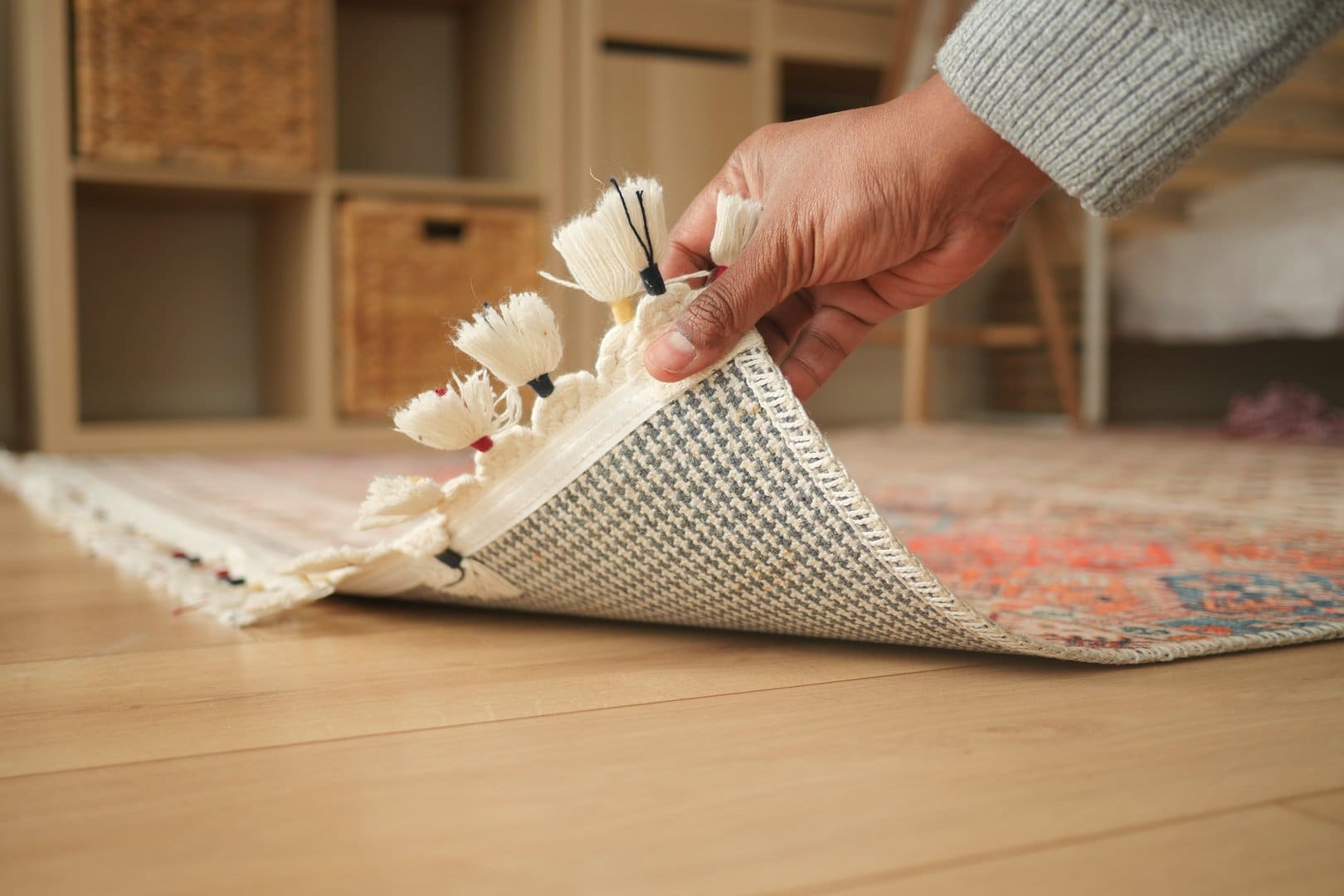
If you only do one of these, make it the first. A clean rug stored imperfectly usually survives. A dirty rug stored perfectly is a moth buffet.
This is the step people skip, and it causes the most expensive damage. Everything a rug picks up in normal use — skin cells, pet dander, food crumbs, perspiration, spilled drinks — is protein-based, and protein residue in wool is exactly what clothes-moth larvae feed on. Vacuuming lifts surface debris; it does not touch the soil packed into the foundation.
There is a second reason: stains that are invisible today may not be in two years. Sugars from spilled wine or soda oxidize slowly in the dark and can surface as brown discoloration long after the spill dried. A full immersion wash removes those residues before they set, which is what our five-step cleaning process is built to do.
A rug that feels dry on the surface can still hold moisture in the pile and foundation, and once it is rolled and wrapped that moisture has nowhere to go — mildew can take hold within days. If you washed the rug at home, read how to properly dry a rug after washing first, and give it far longer than you think it needs.
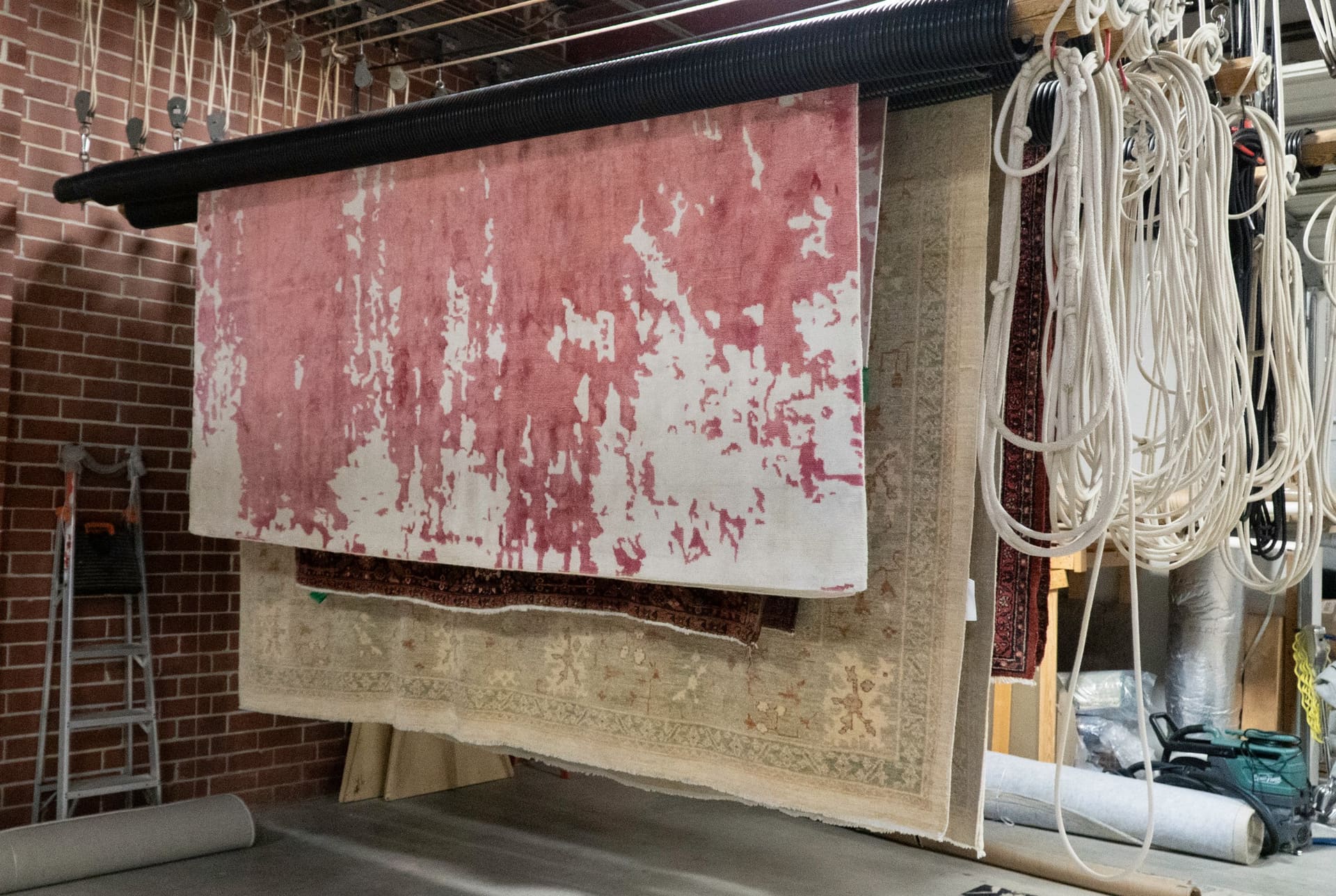
Controlled drying removes moisture from the foundation, not just the surface — the difference between safe storage and mildew.
Folding puts a hard crease across the warp and weft. In a machine-made rug that shows up as a stubborn ridge; in a hand-knotted Oriental or Persian rug, the foundation fibers at the fold line can weaken and crack — structural damage that takes professional repair and reweaving to correct. Rolling spreads the bend across the whole rug instead of concentrating it in one line.
Run your hand across the surface to find the nap direction, then roll from the end the pile leans toward so the fibers lie down naturally. For a month or two, pile facing in is fine; for longer storage, roll pile side out so the face is not compressed against itself.
Roll from a short end so the finished roll is as narrow as possible, and keep the edges aligned as you go. A crooked roll puts uneven tension on one selvedge and can distort the rug's shape over time. On larger rugs, a second pair of hands helps.
Rolling a valuable rug around a sturdy cardboard or PVC tube keeps the innermost turns from bending too tightly — important for antique, silk, and finely knotted pieces, where a tight inner radius stresses old foundation threads. Our guide to identifying quality rugs will tell you what you are working with.
Secure the roll in three or four places with soft cotton twill tape or strips of sheeting, snug but not tight. Never put packing tape on pile or fringe — the adhesive bonds to the fibers and pulls them out. Thin rope and bungee cords bite in and leave compression marks.
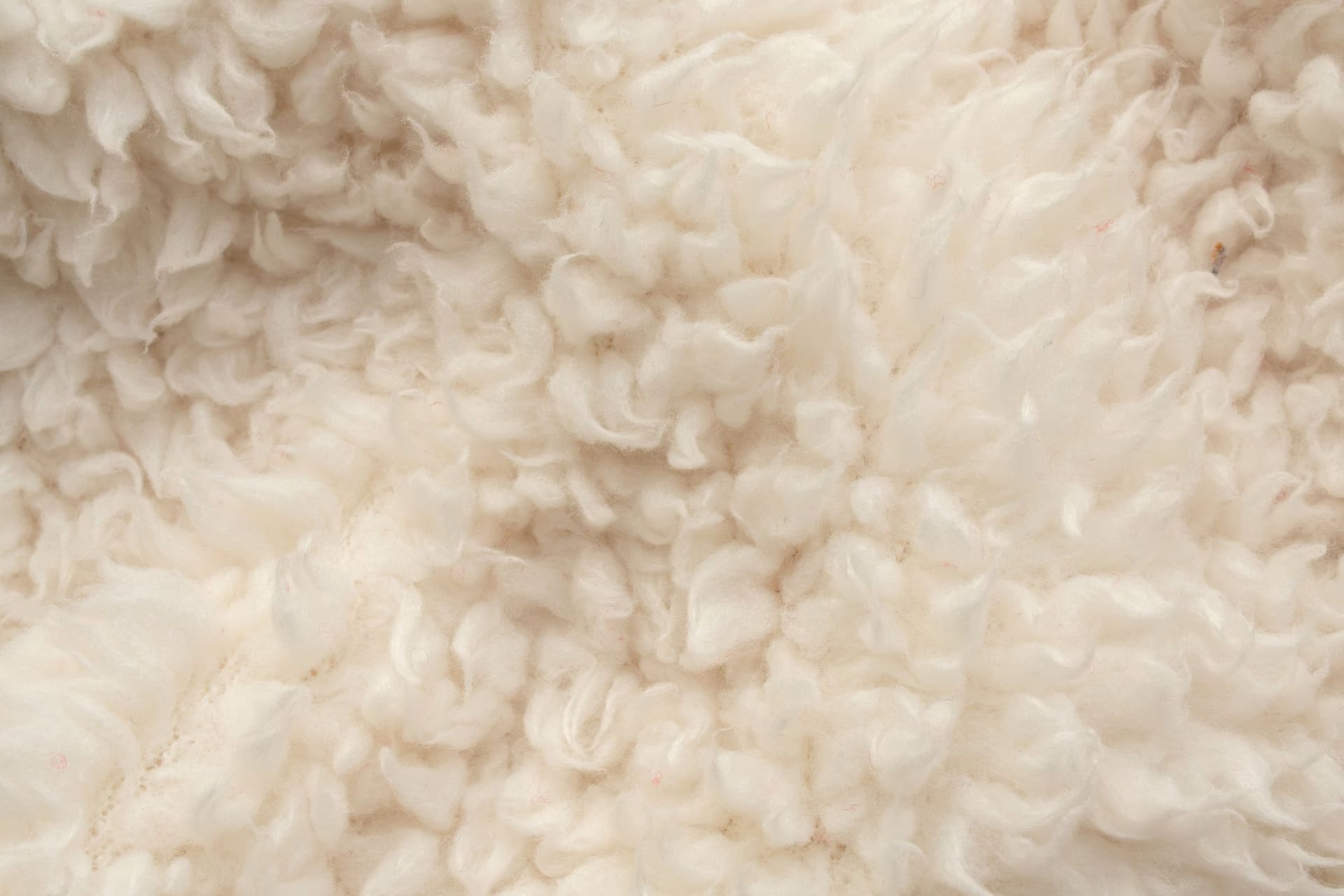
Wool fibers have a natural lean. Rolling with the nap keeps the pile from being crushed backward for months at a time.
The wrap has two jobs: keep dust and insects out, and let water vapor escape. Sealed plastic does the first and fails the second, which is why shrink-wrapped rugs so often come out of storage smelling sour. Wool is hygroscopic — it absorbs and releases moisture — so it has to be able to exchange with the air around it.
| Wrapping Material | Verdict | Why |
|---|---|---|
| Tyvek or breathable rug wrap | Best | Blocks dust, insects, and liquid water while letting vapor pass through |
| Clean cotton sheet or muslin | Good | Breathable and cheap; offers less protection against pests and dust |
| Acid-free tissue or paper | Good for antiques | Used as an inner layer against delicate or antique faces; no acid transfer |
| Sealed plastic sheeting | Avoid | Traps condensation against the fibers — the leading cause of mildew and odor |
| Nothing at all | Avoid | Leaves the rug open to dust, insects, and abrasion from whatever it touches |
If plastic is genuinely the only option — a short cross-country move, say — leave both ends of the tube open and unwrap the rug the moment it arrives. For rugs being cleaned on their way into storage, an optional MicroSeal fiber protection treatment adds stain and soil resistance for when the rug goes back into service.
Location is where Georgia makes this harder than it is elsewhere. Our long, humid summers mean an unconditioned space can sit at high relative humidity for months — enough for mildew to establish in wool and for moth activity to accelerate. Storage magnifies every effect described in how Atlanta's climate affects area rugs, because nobody is around to notice.
One habit worth building: unroll the rug and look at it every six to twelve months. Ten minutes of inspection is how small problems get caught while they are still small.
Storage is the most common way a rug develops a moth problem. Clothes moths want exactly what a stored rug offers: darkness, wool, and months without disturbance. Damage usually starts on the back or along the edges where nobody looks, and by the time the rug is unrolled, whole patches of pile can be gone to the foundation.
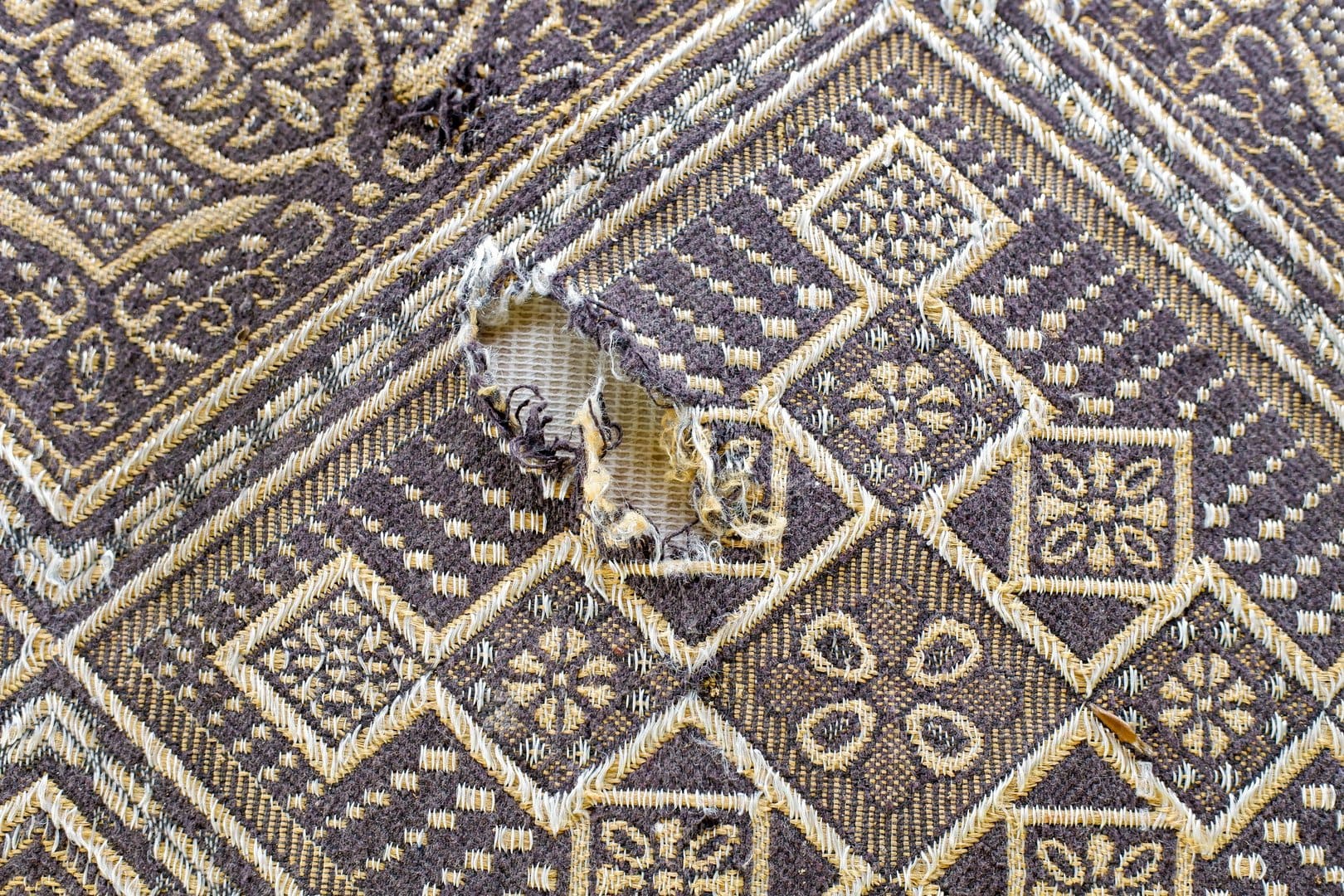
A word on mothballs: we do not recommend sprinkling them into a rolled rug. The odor absorbs into wool and can take months of airing to fade, and the vapor concentration inside a loosely wrapped roll is rarely high enough to reliably kill eggs. You end up with a rug that smells like mothballs and may still have moths.
If you find live larvae, casings, or sandy-looking debris when you unroll a rug, isolate it before it goes near anything else made of wool. Our moth removal and prevention service uses a deep-freeze process that kills every life stage without harsh chemicals, and our guides to getting rid of rug moths in Atlanta and treating wool moths cover what to look for.
Give the rug a day or two to acclimate, and check it over before it goes back into the room:
Silk and viscose show pressure marks and water spotting far more readily than wool. If yours came out of storage looking flat or blotchy, read how to clean a silk rug before attempting anything at home.
Clean it, dry it completely, roll it with the nap, wrap it in something breathable, and keep it flat, off the floor, and in conditioned air. Follow those five steps and a rug can sit for years and come out the way it went in. Skip the first and the rest barely matters — the same rug maintenance habits that protect a rug in your living room protect it in a closet.
If a rug is headed into storage soon, the easiest path is to have it washed on its way there. Rugs 8' x 10' and larger qualify for free pickup and delivery anywhere in metro Atlanta — or request a free quote and we will tell you what your rug needs before it disappears for a year.
Common questions about storing area rugs safely
A professional wash removes the soil and residue that attract moths — the single best thing you can do for a rug that is about to spend a year rolled up. Free pickup and delivery on rugs 8' x 10' and larger in metro Atlanta.

Learn how to identify quality rugs by examining materials, weave, knot density, fringe, and dyes. Expert rug insights from S&S Rug Cleaners.
Read MoreDiscover 5 expert tips to keep your area rugs clean and well maintained — from vacuuming and spills to rug pads and professional cleaning.
Read MoreAtlanta's humidity, pollen, and climate can damage area rugs over time. Learn how weather affects rugs and when professional cleaning is recommended.
Read More