How to Get Rid of Wool Moths
Learn how to identify and eliminate wool moth infestations in rugs and textiles. Practical prevention tips and effective treatments to protect your rugs.
Read MoreFree Pickup & Delivery (8' x 10'+, Metro Atlanta) | 15% Off Drop-Off Service
Identify, prevent, and protect your rugs from costly moth damage before it's too late.
Rug moths can quietly cause significant damage to area rugs, especially rugs made from wool or other natural fibers. Many homeowners do not realize there is a moth problem until holes or thinning areas appear.
In Atlanta homes, warm temperatures and indoor humidity can allow moth infestations to develop year-round. Understanding how to identify rug moths early and how to prevent them can help protect your rugs from permanent damage. If you're concerned about protecting your investment, professional rug cleaning in Atlanta can help.
Clothes moths (Tineola bisselliella) and webbing clothes moths are the two most common species that attack rugs. Despite their name, these moths target any natural fiber—wool, silk, cotton, and even blends containing these materials. The adult moths themselves don't cause damage; it's the larvae that feed on keratin protein found in natural fibers. A single female moth can lay 50 to 100 eggs, and the larvae can feed undetected for months, hidden in dark areas under furniture or along rug edges. By the time visible damage appears, significant destruction has already occurred.
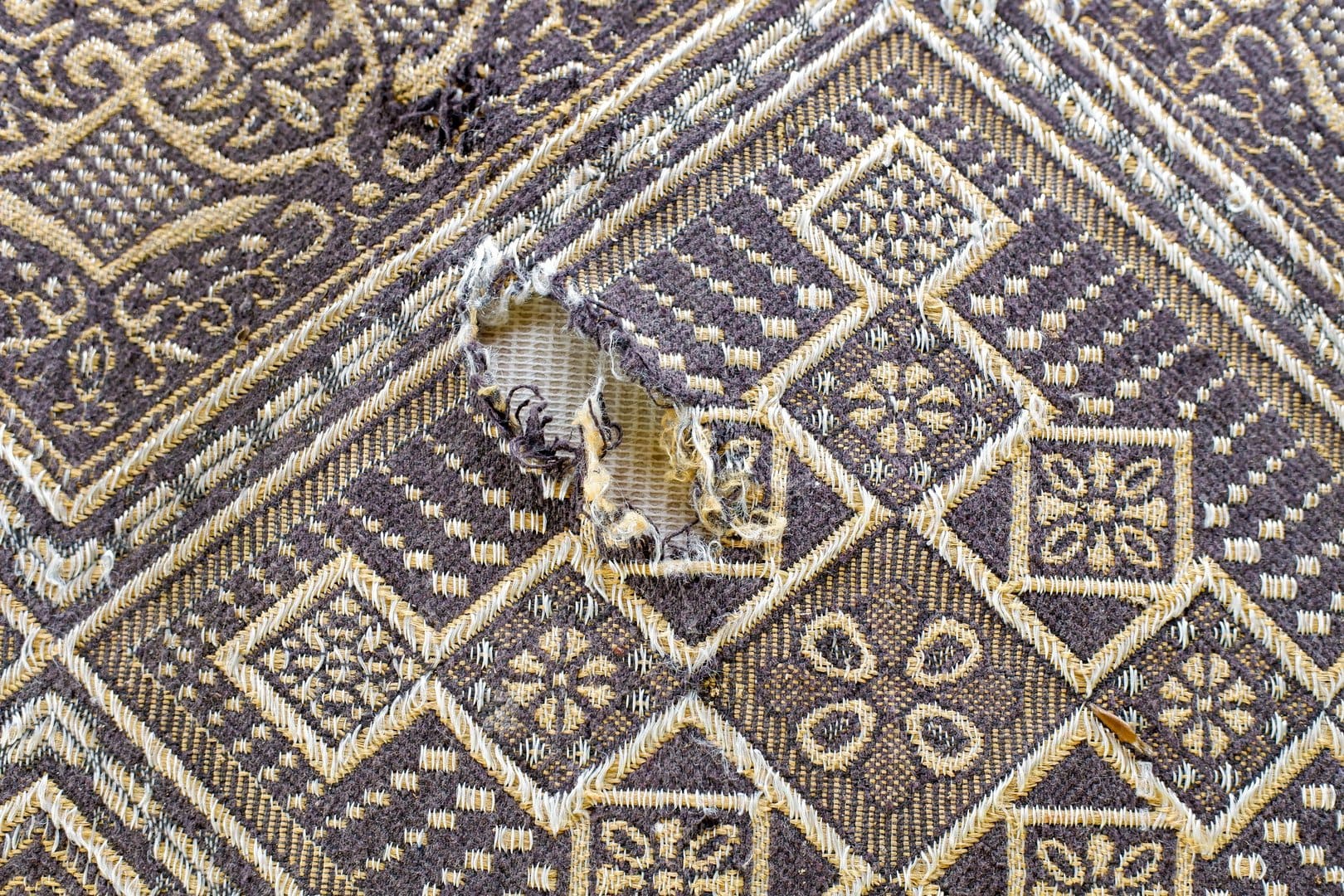
Rug moth damage often appears as holes or thinning areas in natural fiber rugs.
Rug moths are small insects whose larvae feed on natural fibers. The larvae, not the adult moths, cause damage by eating wool, silk, and other protein-based materials.
Rugs are especially vulnerable because:
Rugs are often left undisturbed for long periods, giving larvae time to feed.
Dirt and oils in rug fibers provide food that supports moth larvae.
Dark, low-traffic areas under furniture create ideal nesting conditions.
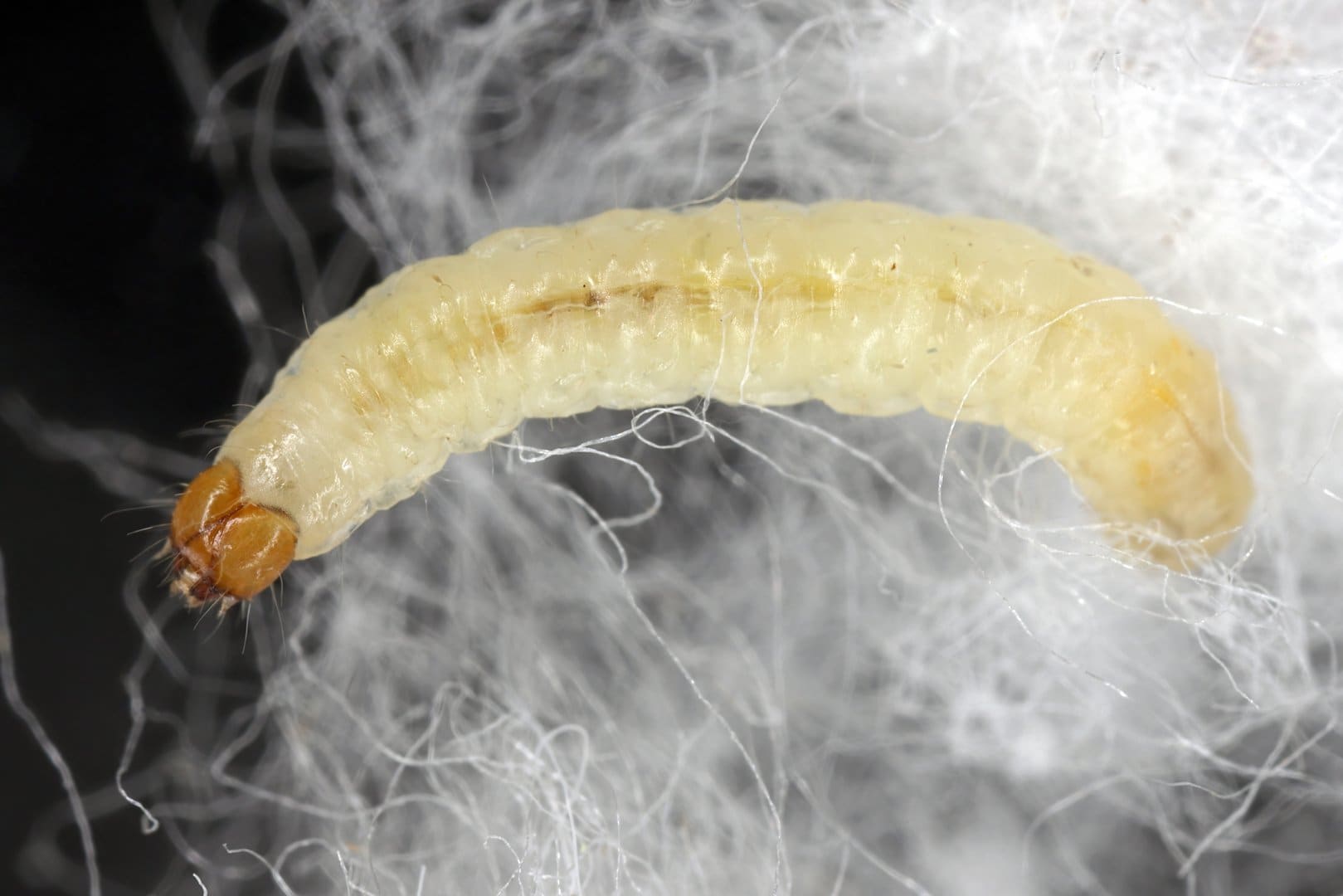
Moth larvae, not adult moths, are responsible for rug damage as they feed on natural fibers.
Early detection is critical. Signs of rug moths include:
Important: By the time holes appear, infestation is often advanced. Regular inspection is essential.
Several factors make Atlanta homes more susceptible to rug moth infestations:
Warm indoor temperatures year-round create ideal conditions for moth activity.
Atlanta's humidity supports larvae development and reproduction cycles.
Rugs placed on hardwood floors without airflow trap moisture and attract pests.
Homes with pets attract moths due to oils and dander embedded in fibers.
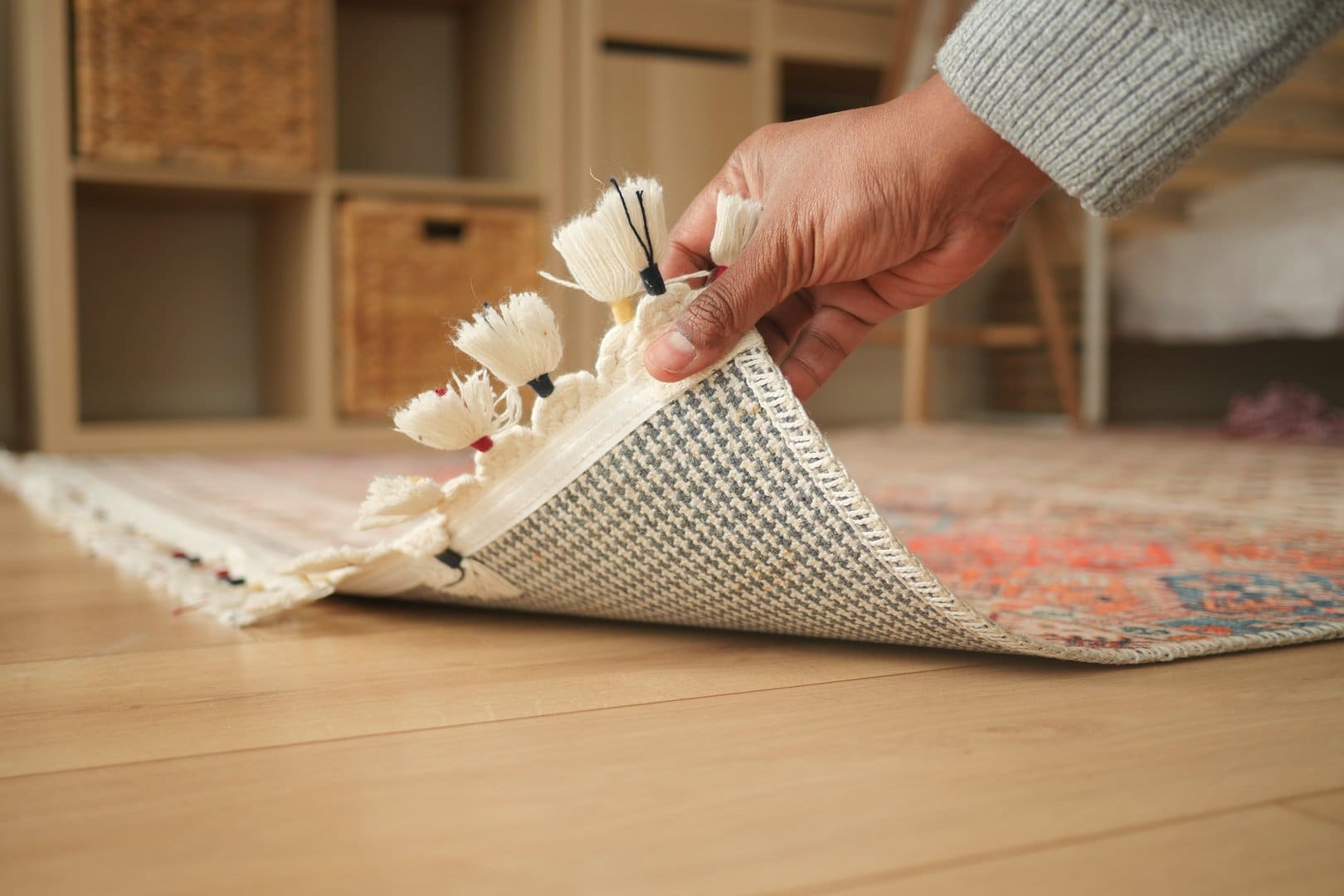
Regularly lifting and inspecting your rugs can help detect moth activity early.
Prevention is the most effective approach. Follow these steps to protect your rugs:
Vacuum rugs frequently, including edges and underneath, to remove larvae and eggs.
Rotate rugs periodically to expose all areas to light and airflow.
Never store rugs without proper professional cleaning first.
Keep rugs dry and well-ventilated to discourage moth activity.
Clean up spills and pet odors quickly to remove food sources. Learn more about caring for your rugs.
Pro Tip: Clean rugs are less attractive to moth larvae. Regular professional cleaning is one of the best defenses.
DIY methods may reduce visible moth activity but often fail to fully eliminate larvae.
Important: Without proper treatment, moths often return. Professional intervention may be necessary for lasting results.
Professional rug cleaning services or moth treatment is recommended when:
Professional processes can safely remove larvae and help prevent further damage to your valuable rugs.
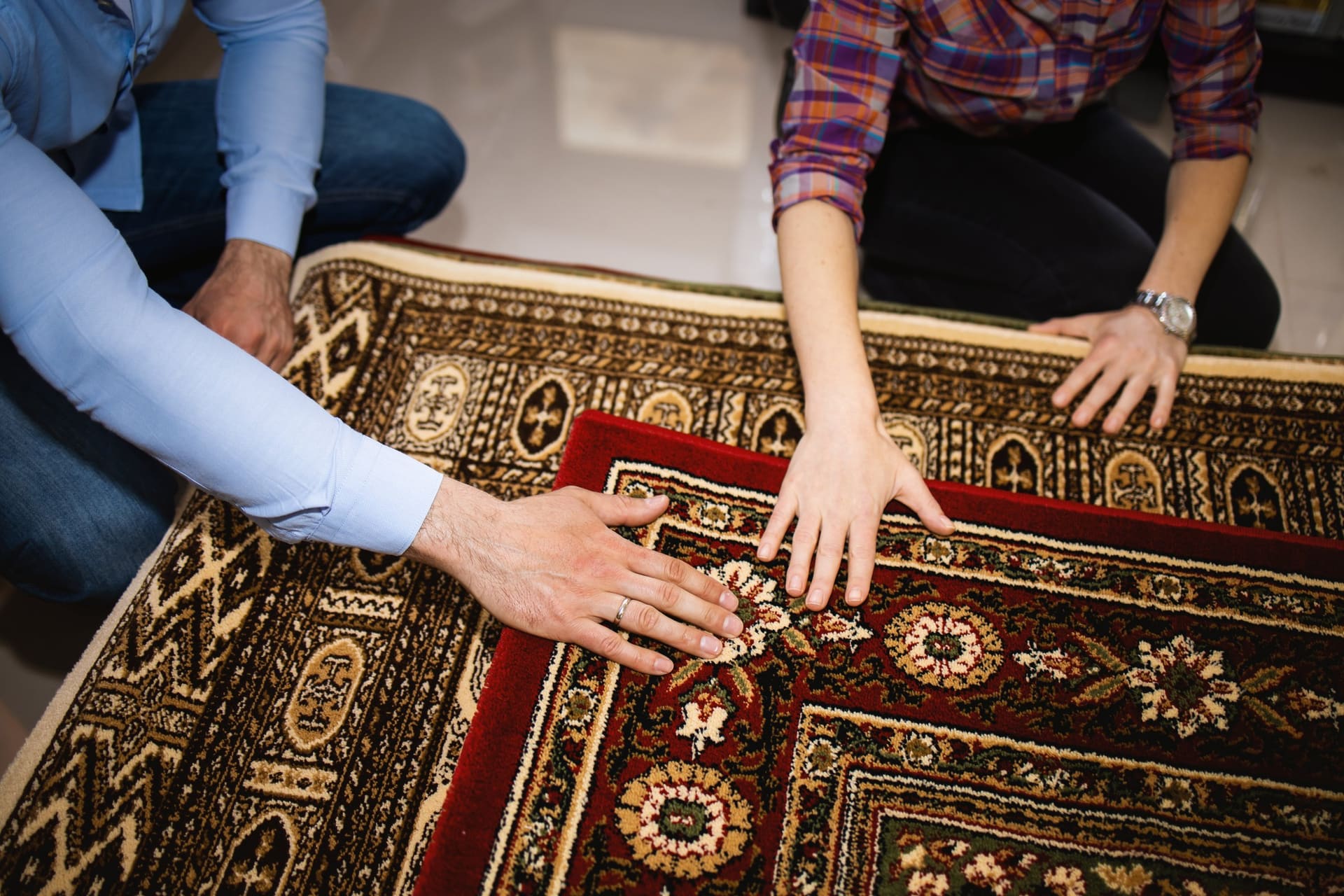
Professional rug inspection can identify moth damage early and recommend appropriate treatment.
Common questions about rug moth prevention and treatment
If you suspect rug moth activity or want to prevent damage before it starts, professional rug care can help protect your investment.

Learn how to identify and eliminate wool moth infestations in rugs and textiles. Practical prevention tips and effective treatments to protect your rugs.
Read MoreMusty smell in your area rug? Learn what causes mildew odor, a step-by-step fix that works at home, and when an Atlanta rug needs a professional wash.
Read MoreDiscover 5 expert tips to keep your area rugs clean and well maintained — from vacuuming and spills to rug pads and professional cleaning.
Read More