How to Get Rid of Rug Moths in Atlanta
Rug moths can cause serious damage to area rugs. Learn how to identify rug moths, prevent infestations, and protect your rugs in Atlanta homes.
Read MoreFree Pickup & Delivery (8' x 10'+, Metro Atlanta) | 15% Off Drop-Off Service
What causes that damp, basement-like odor, the at-home method that works on mild cases, and when a rug needs a full wash.
A musty area rug is almost always a moisture problem, not a dirt problem. Somewhere in the pile, the backing, or the pad underneath, water sat long enough for mildew to take hold. That damp, basement-like odor is the byproduct of mold spores feeding on moisture and fibers.
This matters for one practical reason. Until the moisture and the mildew are both gone, the smell keeps coming back. Fabric sprays only mask it for a day or two. Below is what actually causes the odor, the at-home method that works on mild cases, the mistakes that make it worse, and how to tell when your rug needs a professional wash.
Mild, recent odors usually clear at home. Anything caused by a flood, a long-term leak, or months in storage needs professional washing, because the source sits in the backing where household products never reach.
Mildew needs three things: moisture, warmth, and something organic to feed on. Wool, cotton, jute, and silk supply the food. In Georgia, the climate supplies the rest. Find the source first, because treating the odor without fixing the cause just resets the clock.
A glass of water, a plant that overflowed, a wet umbrella left in place. The surface felt dry within hours, but the foundation underneath stayed damp for days. That is all mildew needs. Most musty rugs we see in the shop trace back to something this small.
Summers here run humid for months at a time. Natural fibers absorb moisture straight out of the air, and a rug in a basement, sunroom, or closed-up vacation house never gets a chance to dry out. Our guide to how Atlanta's climate affects area rugs covers why this region is harder on rugs than most.
Cheap foam and rubber-backed pads trap moisture against the floor and the rug at the same time. The rug can smell musty while the real problem is the pad. A breathable custom-cut rug pad lets air move underneath, which is one reason the right pad matters more than most people expect.
A rug rolled in plastic seals moisture in with the fibers. Six months later it comes out smelling like a damp cellar, sometimes with staining on the back. Storing rugs correctly is simple once you know the rules — see how to store an area rug safely.
Flooding, a burst pipe, or a slow appliance leak soaks the foundation completely. Pet urine does the same thing and adds its own ammonia note on top of the mildew. Both need a dedicated process: act within 48 hours on water damage, and treat contamination with pet urine and odor removal rather than surface cleaning.
If you can identify which of these caused your odor, you already know how deep the problem goes. A spilled glass is a weekend project. A flooded basement is a shop job.
This works on mild, recent odors in a rug that is structurally sound. Plan on two days, most of which is drying time. Work outdoors or in a garage if you can.
Lift the rug off the floor and move air across both sides. Fans, open windows, and a dehumidifier all help. A rug draped over a railing dries far faster than one lying flat. Do not skip this step or shorten it. Everything after this fails if moisture is still in the pile.
Dry mildew turns powdery and releases easily. Vacuum the face of the rug slowly, then flip it and vacuum the back. Take the vacuum outside to empty it so you are not redistributing spores indoors. Skip the beater bar on hand-knotted or antique pieces.
Sprinkle baking soda generously across the pile and work it in gently with a soft brush. Baking soda is alkaline, so it neutralizes the acidic compounds mildew produces instead of covering them. Leave it eight hours or overnight, then vacuum it out thoroughly. Leftover powder attracts dirt.
Mix one part white vinegar with three parts water in a spray bottle. Spot test a hidden corner first and blot with a white cloth to check for dye bleeding. If the cloth stays clean, mist the affected area lightly. Never saturate it. The vinegar smell fades as the rug dries.
Dry the rug fully a second time before it goes back down. Fresh air and indirect sunlight both help; strong direct sun for hours can fade dyes. Then give it a week. If the musty smell creeps back, mildew is living in the foundation and no surface treatment will reach it.
Drying is where most home attempts go wrong, which is why drying a rug properly after washing is worth reading before you start. In our shop, controlled drying is a stage of the process with its own equipment, not an afterthought.
Nearly every rug that arrives at our facility smelling worse than it should has been through at least one of these:
The pattern is the same in all six: adding water without a way to remove it, or using a chemical harsh enough to damage the rug. Our comparison of professional versus DIY rug cleaning walks through where the line usually sits.
Household products only reach the top of the pile. Mildew that has moved into the foundation has to be flushed out with water, and the rug then has to be dried faster than mildew can regrow. That combination is hard to do at home.
Bring in a professional if any of these apply:
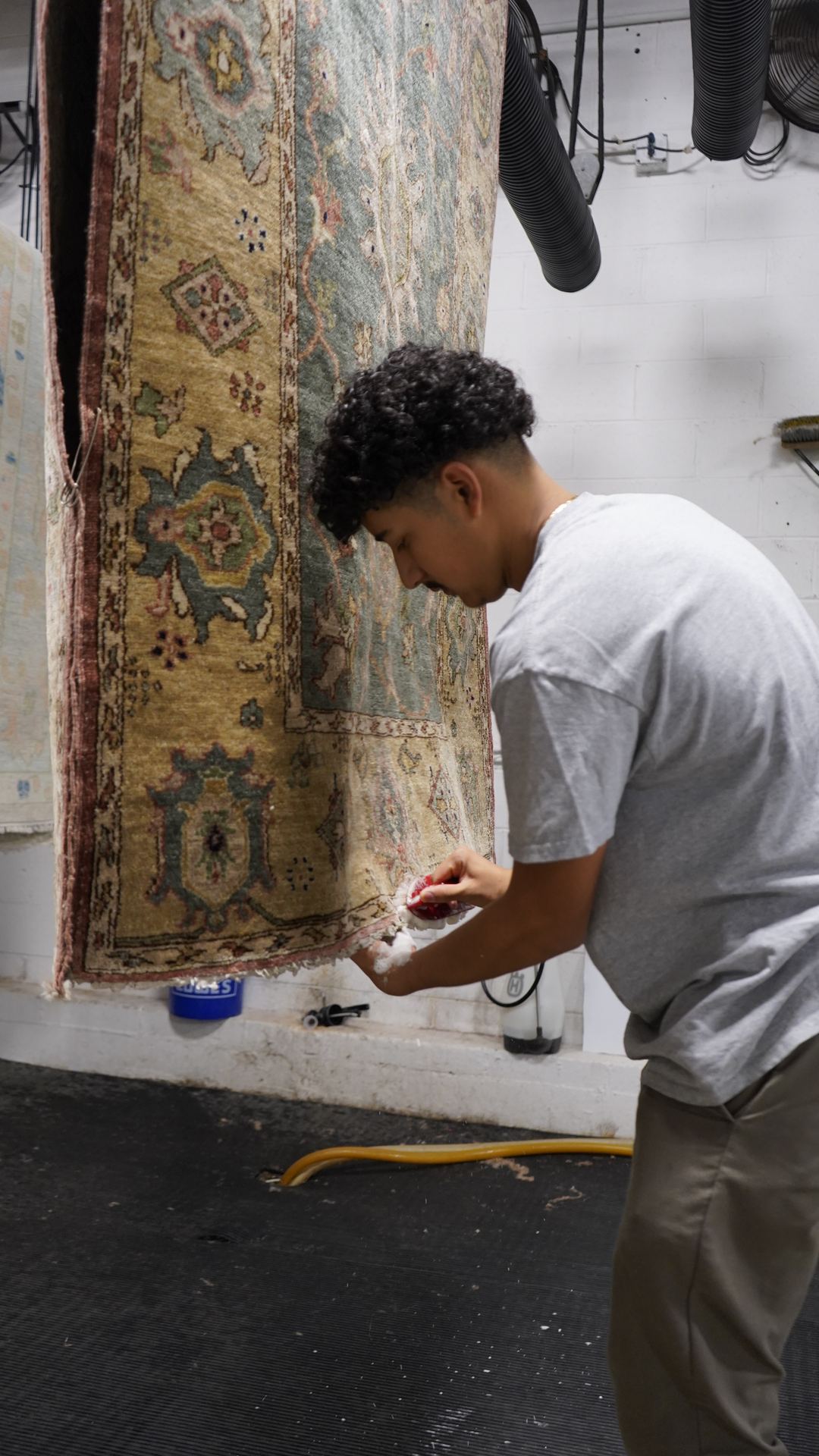
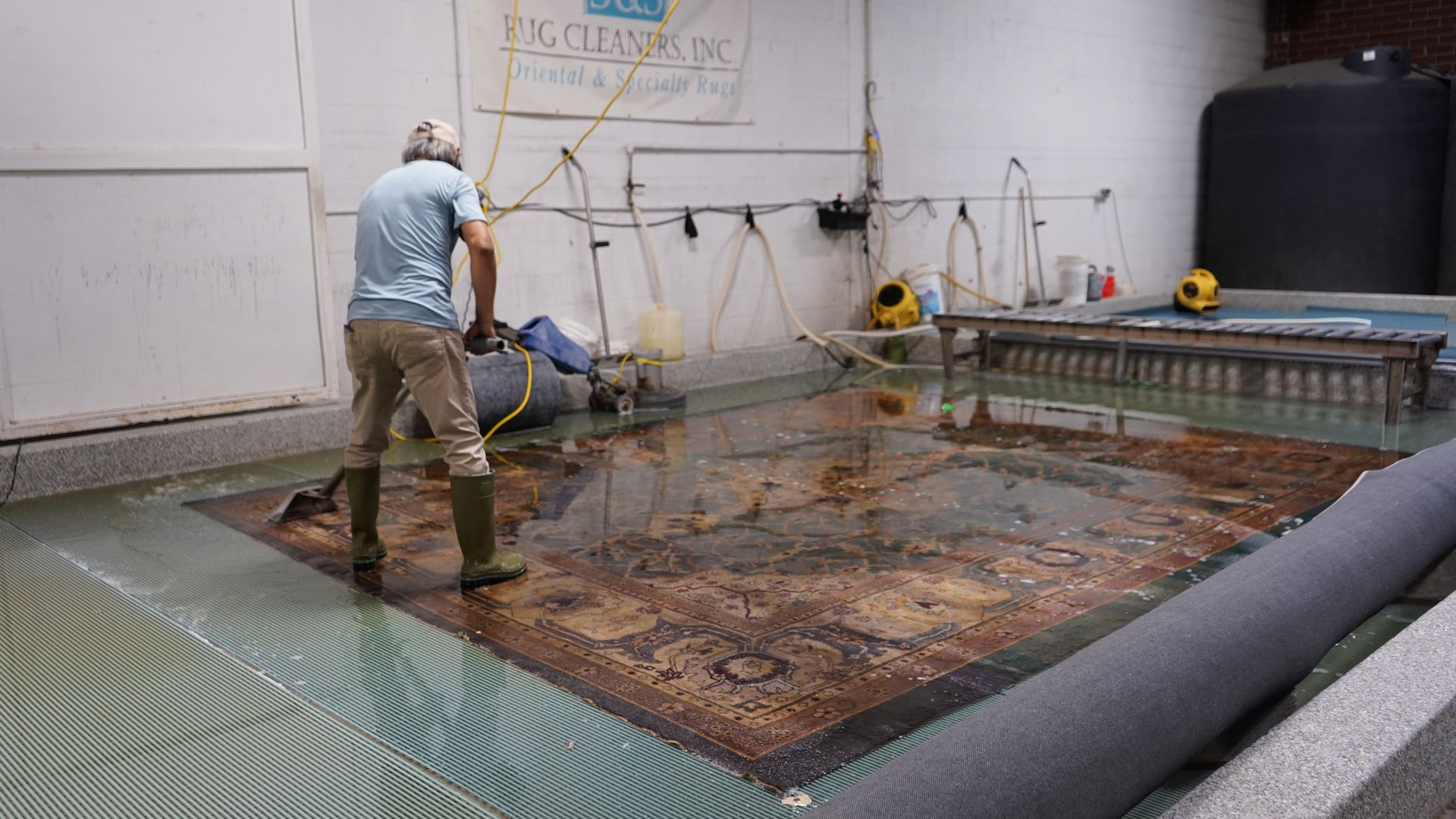
A proper shop wash removes the odor at the source. The rug is dusted to pull out dry soil, tested for colorfastness, washed by full immersion so water moves through the foundation instead of across it, treated with an odor neutralizer where contamination calls for it, then dried under controlled airflow and inspected. You can see each stage in our 5-step rug cleaning process.
For metro Atlanta rugs measuring 8' x 10' or larger, pickup and delivery is free, so a musty rug never has to ride in your car. Smaller rugs dropped off at our Chattahoochee Avenue facility earn 15% off.
Once a rug has grown mildew once, it will do it again under the same conditions. Prevention here is mostly humidity control and airflow.
A protective treatment such as MicroSeal helps fibers shed liquid instead of absorbing it, which buys you time to blot a spill before it reaches the foundation. Regular washing matters too, since embedded soil holds moisture — our guide on how often Atlanta rugs need cleaning gives realistic intervals for this climate. Wool owners should also read how to clean a wool rug without shrinking it before attempting anything at home.
Dry the rug completely, treat it with baking soda and diluted vinegar, and give it a week. Mild cases clear up. If the smell comes back, stop treating the surface — the mildew is in the foundation, and only a full-immersion wash with controlled drying will remove it. Acting early is also cheaper, because mildew left alone weakens fibers until repair work becomes necessary.
Not sure which situation you are in? Send us a photo and a description with a free rug quote request, or call (404) 355-2126. After 30 years of washing Atlanta rugs, we can usually tell you in a couple of minutes whether it is a weekend project or a shop job.
Common questions about mildew odor in area rugs
Full-immersion washing, odor neutralizing, and controlled drying — the only reliable way to remove mildew odor from the foundation of a rug. Free pickup and delivery on rugs 8' x 10' and larger in metro Atlanta.

Rug moths can cause serious damage to area rugs. Learn how to identify rug moths, prevent infestations, and protect your rugs in Atlanta homes.
Read MoreDiscover 5 expert tips to keep your area rugs clean and well maintained — from vacuuming and spills to rug pads and professional cleaning.
Read MoreAtlanta's humidity, pollen, and climate can damage area rugs over time. Learn how weather affects rugs and when professional cleaning is recommended.
Read More