What Is the Best Way to Clean a Rug?
Discover the best ways to clean area rugs safely — from routine vacuuming and spot care to professional deep cleaning. Learn what works and what to avoid.
Read MoreFree Pickup & Delivery (8' x 10'+, Metro Atlanta) | 15% Off Drop-Off Service
A burst pipe, a backed-up water heater, or a storm in the basement does not have to cost you the rug — if you move quickly and avoid the mistakes that make the damage permanent.
A water-damaged rug is one of the few rug problems that gets dramatically worse by the hour. Mold and mildew can take hold in a saturated textile in roughly 24 to 48 hours, and in a humid Georgia summer that window is at the short end of the range. The good news is that most rugs soaked by clean water are fully recoverable when they are extracted, moved, and dried correctly in those first two days.
This guide walks through exactly what to do the moment you find a wet rug, what to avoid, how the source of the water changes everything, and what professional water-damage rug restoration actually involves.
If the rug is valuable or the water was not clean, skip the DIY drying attempt and call us at (404) 355-2126. We wash rugs off-site in a controlled facility, and pickup is free on rugs 8' x 10' and larger anywhere in metro Atlanta.
A wet rug is not simply a rug that needs to dry. Four separate kinds of damage begin the moment it is saturated, and each one runs on its own timer:
Mold spores are already present in every home; they only need moisture and time. Wool is an organic protein fiber, so a saturated wool rug is an ideal growth medium. Atlanta's summer humidity means indoor air alone will not dry a thick rug fast enough — see how Georgia's climate affects area rugs year-round. Once mold reaches the foundation, the musty odor becomes very difficult to remove and can degrade your home's indoor air quality.
Prolonged saturation lets unstable dyes travel from one area of the pile into another — deep reds bleeding into ivory borders is the classic example. The longer a rug stays wet, the further the dye travels. Color run removal is possible in skilled hands, but preventing the run by drying fast is far better than correcting one later.
Cotton warp and weft threads swell when wet and contract as they dry. Uneven drying pulls a rug out of square, creates ripples, and can split weakened foundation threads — damage that then needs rug repair and restoration rather than just a wash.
A wet rug left on hardwood pulls tannins out of the floor finish and leaves dark shadows on both surfaces. Furniture legs sitting on a soaked rug can leave rust and wood stain that soaks straight into the pile.
Shut off the supply valve or the main. If water has reached outlets, cords, or a panel, cut power to the area before you step into it. Nothing on this list is worth an electrical risk.
Wide shots of the room, close-ups of the rug, and a photo of the source. If you plan to file a homeowners claim, this five-minute step is what supports it. Note the date and time the loss was discovered.
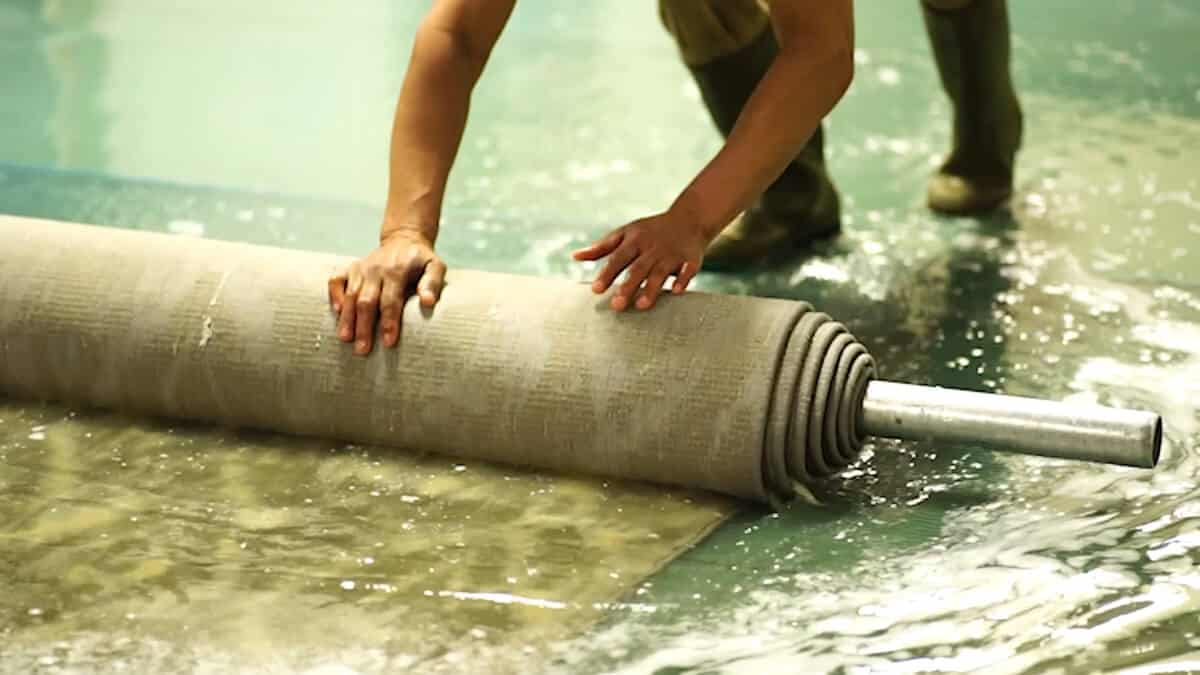
Remove furniture, or slide foil or plastic blocks under the legs. Then get the rug out of the wet area entirely. A soaked 9' x 12' wool rug can weigh several hundred pounds, so roll it from one end rather than dragging it — dragging a saturated rug is how foundations tear. Pull the rug pad out separately; most pads hold water like a sponge and many cannot be salvaged.
A wet/dry shop vacuum removes far more water than towels. Work slowly in overlapping passes across the whole rug, not just the visibly wet part — water wicks outward through the foundation well past the obvious edge.
Lay the rug flat on a clean, dry, non-staining surface and raise it slightly — on blocks, slats, or upturned buckets — so air can reach the back. Run fans across the surface and a dehumidifier in the room. Our guide to drying a rug properly after washing covers the same principles in more detail.
Home drying slows the damage; it does not remove contamination, and it rarely dries the foundation of a dense rug all the way through. Have the rug picked up while it is still merely wet, not after it has started to smell. Request a free quote or call and describe what happened — the source of the water changes the treatment.
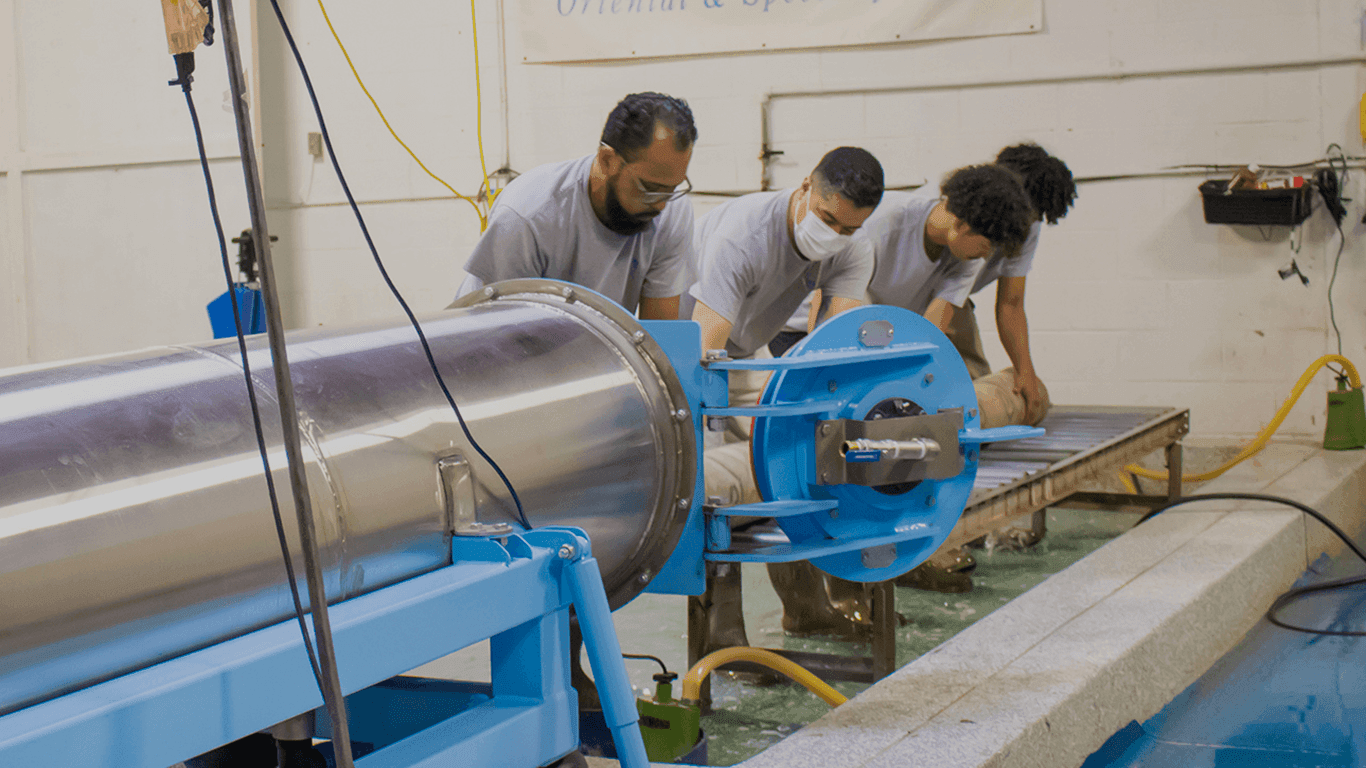
A high-speed centrifuge pulls out water no household equipment can reach, cutting drying time from days to hours.
Most of the rugs we see written off after a water loss were harmed by the response, not the water. Do not do any of the following:
Silk and viscose rugs deserve extra caution — they lose significant strength when wet and stain from plain water alone. If that is what got soaked, read how to clean a silk rug without ruining it and stop at extraction. The same restraint applies to fine Oriental and Persian rugs, where dye stability is never something to assume.
Restoration professionals classify water losses into three categories. Where your rug's soaking falls determines whether it is a straightforward wash, a decontamination job, or a loss:
| Category | Typical Source | Outlook for the Rug |
|---|---|---|
| Clean water | Supply line, burst pipe, overflowing tub or sink, water heater | Usually fully restorable with prompt extraction, washing, and controlled drying |
| Gray water | Dishwasher or washing machine discharge, HVAC condensate, sump overflow | Usually restorable, but requires full immersion washing and antimicrobial treatment |
| Black water | Sewage backup, toilet overflow with solids, river or storm floodwater | Treated as a health hazard; heirloom pieces are sometimes salvaged, but many rugs are not |
Two practical notes. First, clean water does not stay clean — after about 48 hours in a warm room, a Category 1 loss is treated as Category 2. Second, if the water passed through an area where pets have had accidents, the rug needs pet urine and odor removal as well, because moisture reactivates old urine salts and the smell comes back stronger than before.
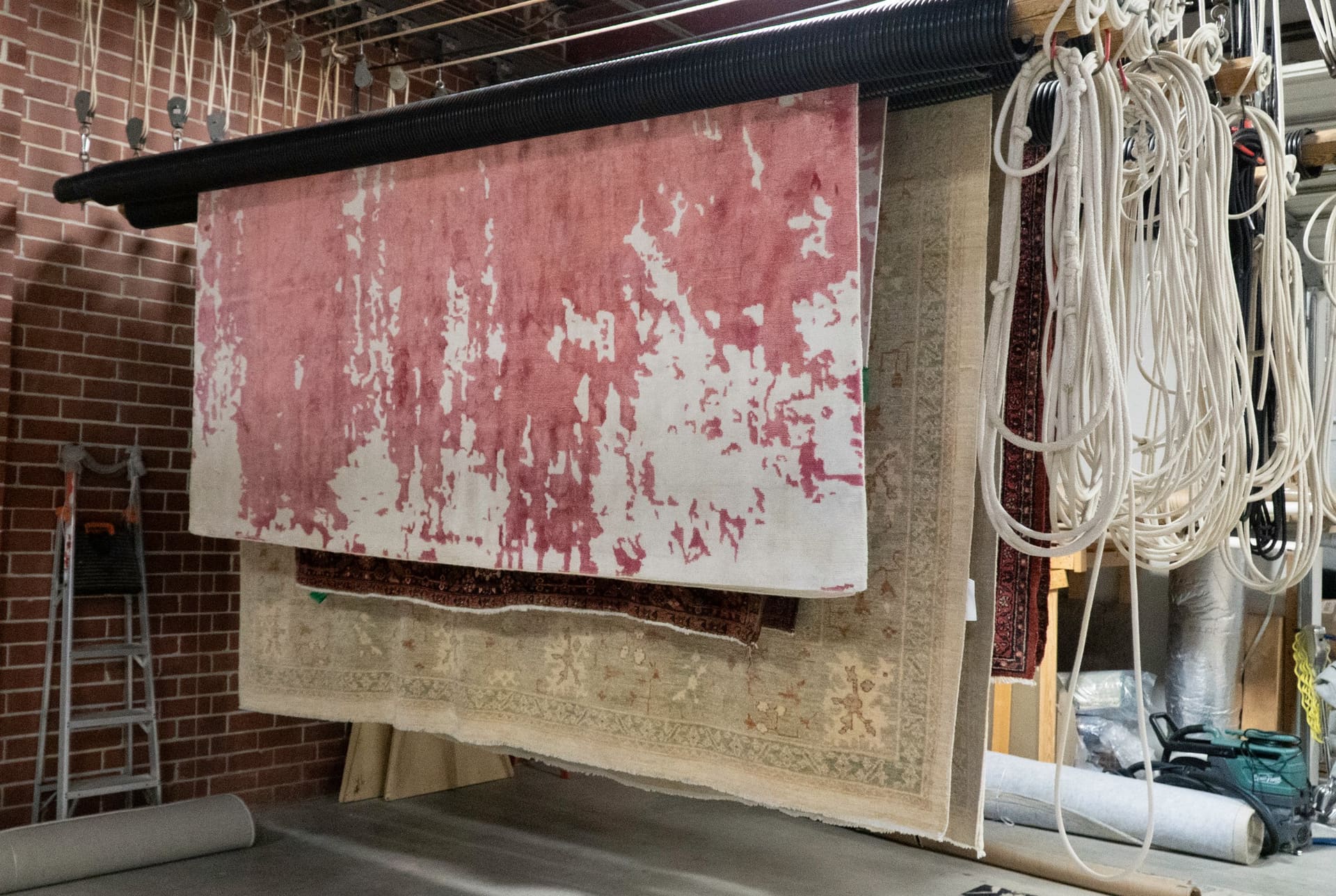
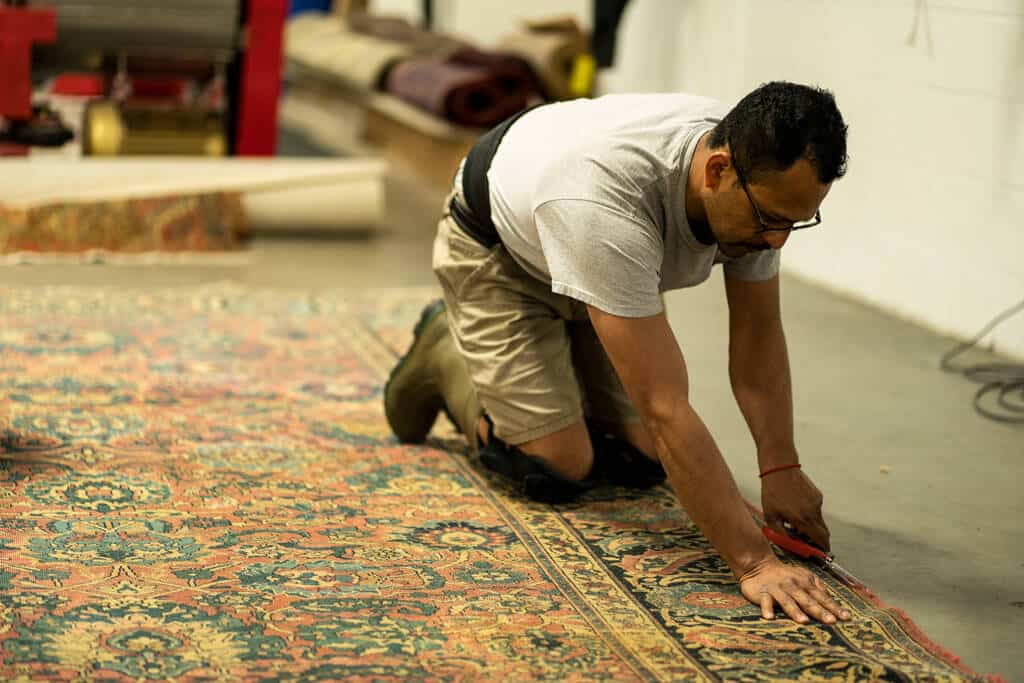
A water-damaged rug is not cleaned in your home. It comes to our Chattahoochee Avenue facility, where the work follows the same 5-step cleaning process we use on every rug, with contamination-specific steps added:
Cost depends on size, fiber, and how contaminated the rug is; our Atlanta rug cleaning cost guide explains the ranges and what pushes a job higher. If the rug is going into storage while your floors are repaired, wash it first — our rug storage guide explains why a damp rug in a wrapped roll is the fastest way to lose it.
Water alone rarely destroys a well-made rug. Time destroys it. Get the rug out of the water, extract what you can, dry it flat with air on both sides, and get it to a rug specialist inside 48 hours — and a clean-water soaking is usually a complete recovery. Wait a week, and you are dealing with mold, odor, and dye migration instead.
If your rug is wet right now, call (404) 355-2126 or request a free quote. Tell us the fiber, the size, and where the water came from, and we will tell you honestly whether it needs our facility or just a fan and a weekend.
Common questions about wet, flooded, and mildewed area rugs
Thirty years of restoring flooded, leaked-on, and mildewed rugs across metro Atlanta. Tell us what happened and we'll tell you what your rug needs — with free pickup on rugs 8' x 10' and larger.

Discover the best ways to clean area rugs safely — from routine vacuuming and spot care to professional deep cleaning. Learn what works and what to avoid.
Read MoreDiscover 5 expert tips to keep your area rugs clean and well maintained — from vacuuming and spills to rug pads and professional cleaning.
Read MoreExplore eight common types of rugs — wool, silk, synthetic, hand-knotted, flatweave, and more — with tips on what to consider before purchasing your next rug.
Read More