How to Fix Unraveling Rug Fringe
Rug fringe repair explained: why fringe unravels, safe DIY fixes, pro options like overcasting and refringing, typical costs, and the mistakes to avoid.
Read MoreFree Pickup & Delivery (8' x 10'+, Metro Atlanta) | 15% Off Drop-Off Service
What causes color run, what to do in the first hour, and when a bleeding rug needs professional dye correction.
You spot-clean a spill, or a plant pot leaks overnight. The next morning the red in your rug has crept into the ivory border. The crisp pattern now looks smudged and pink. That is color bleeding, also called color run or dye bleed.
It is one of the most upsetting things that can happen to a rug. It is also one of the easiest problems to make worse. Scrubbing, hot water, and store-bought stain removers can spread loose dye or lock it into the wrong fibers for good.
This guide explains why rug dyes bleed, how to test your own rug, and what to do in the first hour. It also covers how professional color run removal works and what results you can honestly expect.
Speed matters. Fresh, damp dye bleed is far easier to correct than a stain that has dried and sat for weeks. Results depend on the dye, the fiber, and what has already been tried.
Dye is supposed to bond to the fiber and stay there. A dye that does is called colorfast. A dye that lets go when it gets wet is called a fugitive dye. Bleeding happens when loose dye floats out of a dark area and soaks into a lighter one next to it. Pros call that movement dye migration.
Reds are the most common culprit, followed by deep blues and blacks. Those dark shades need the most dye, so there is more that can come loose. Ivory and cream areas show the damage first because they have nothing to hide it.
Atlanta's humidity adds to the problem. A damp rug dries slowly here, and slow drying is when dye moves. That is why every rug we wash is tested first, then dried quickly with controlled airflow.
Any dyed rug can bleed under the wrong conditions. But some types are known for it. Use this table as a rough guide, not a guarantee.
| Rug Type | Bleed Risk | Why |
|---|---|---|
| Over-dyed and vintage "distressed" rugs | Very high | A second layer of bright dye is added on top of the old colors and often is not fully set |
| New hand-knotted rugs with strong reds or navy | High | Excess dye that was never rinsed out at the source |
| Silk and viscose (art silk) | High | Delicate fibers that release dye easily and mark with plain water |
| Rugs with old pet stains or past flood damage | High | The dye bonds are already weakened in those spots |
| Older hand-knotted wool rugs, washed many times | Lower | Loose dye left long ago, though each color still needs testing |
| Machine-made synthetic rugs | Low | Color is usually built into the fiber when it is made |
Before you put any liquid on a rug, do a spot test. It takes five minutes and can save the rug.
Dampen a clean white cotton cloth with cool water.
Press it firmly on the darkest color for 30 to 60 seconds. Pick a spot near a corner. Do not rub.
Lift the cloth and look at it. Any color on the cloth means that dye is not stable.
Repeat for every strong color in the rug. One stable red does not mean the navy is stable too.
A clean cloth is a good sign, but it is not a full pass. Water alone is gentler than a cleaning product. If your rug fails the test, skip home cleaning and read our guide to professional vs. DIY rug cleaning before you go further.
If the rug is still wet and you can see color moving, your goal is simple. Remove moisture, keep things cool, and stop the dye from traveling. You are not trying to clean the stain out yet.
Stop adding liquid. No more water, soap, or spot cleaner. Every extra ounce gives the dye more room to move.
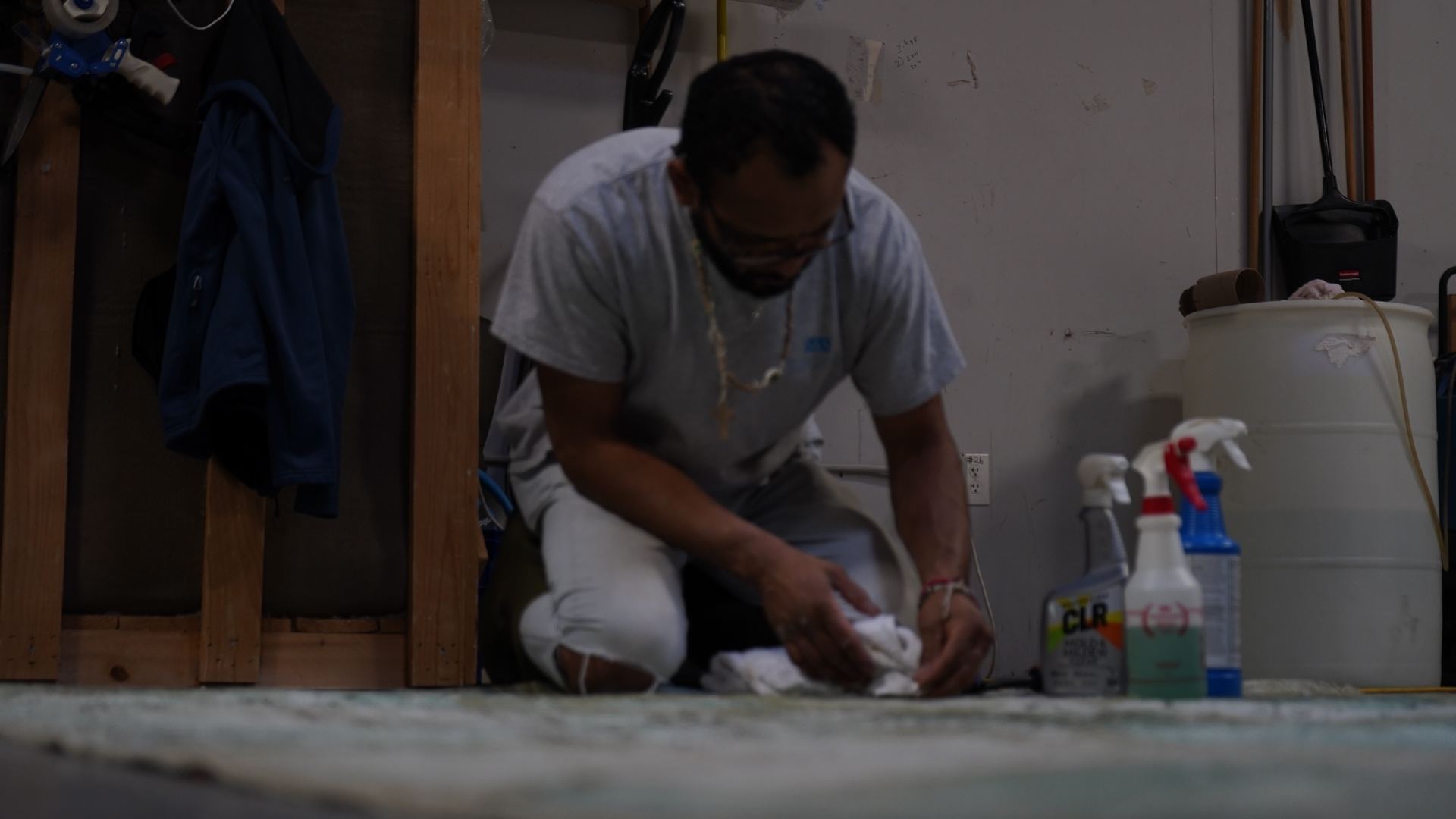
Blot with dry white towels. Press straight down, lift, and switch to a clean section. Work from the light area toward the dark one so you do not drag dye outward.
Lift the rug off the floor. Prop the wet area on a clean, upturned laundry basket or a drying rack so air reaches both sides. This also protects wood floors from dye transfer.
Dry it fast with cool air. Aim fans across the spot and run the air conditioning or a dehumidifier. Never use a hair dryer, heater, or direct sun. Heat sets the stain.
Take photos and call a rug specialist. Note what was spilled and what products were used. That history changes how a pro treats the rug.
Sometimes, a little. A mild acid helps wool hold on to its dye, which is why vinegar shows up in so many home tips. On a small, fresh bleed in a wool rug, a light mist of one part white vinegar to four parts cool water, blotted right away, may slow the movement.
But vinegar will not pull out dye that has already moved. It should not be used on silk or viscose. And soaking the area just restarts the problem. Treat it as first aid, not a cure. For other spills, see our guide to red wine and coffee stains on area rugs. If the bleed covers more than a hand-sized area, skip the vinegar and get it to a professional while it is still fresh.
Dye correction is slow, careful work. The aim is to remove the dye that moved while leaving the original colors where they belong. That takes testing, the right chemistry, and full control of water and drying.
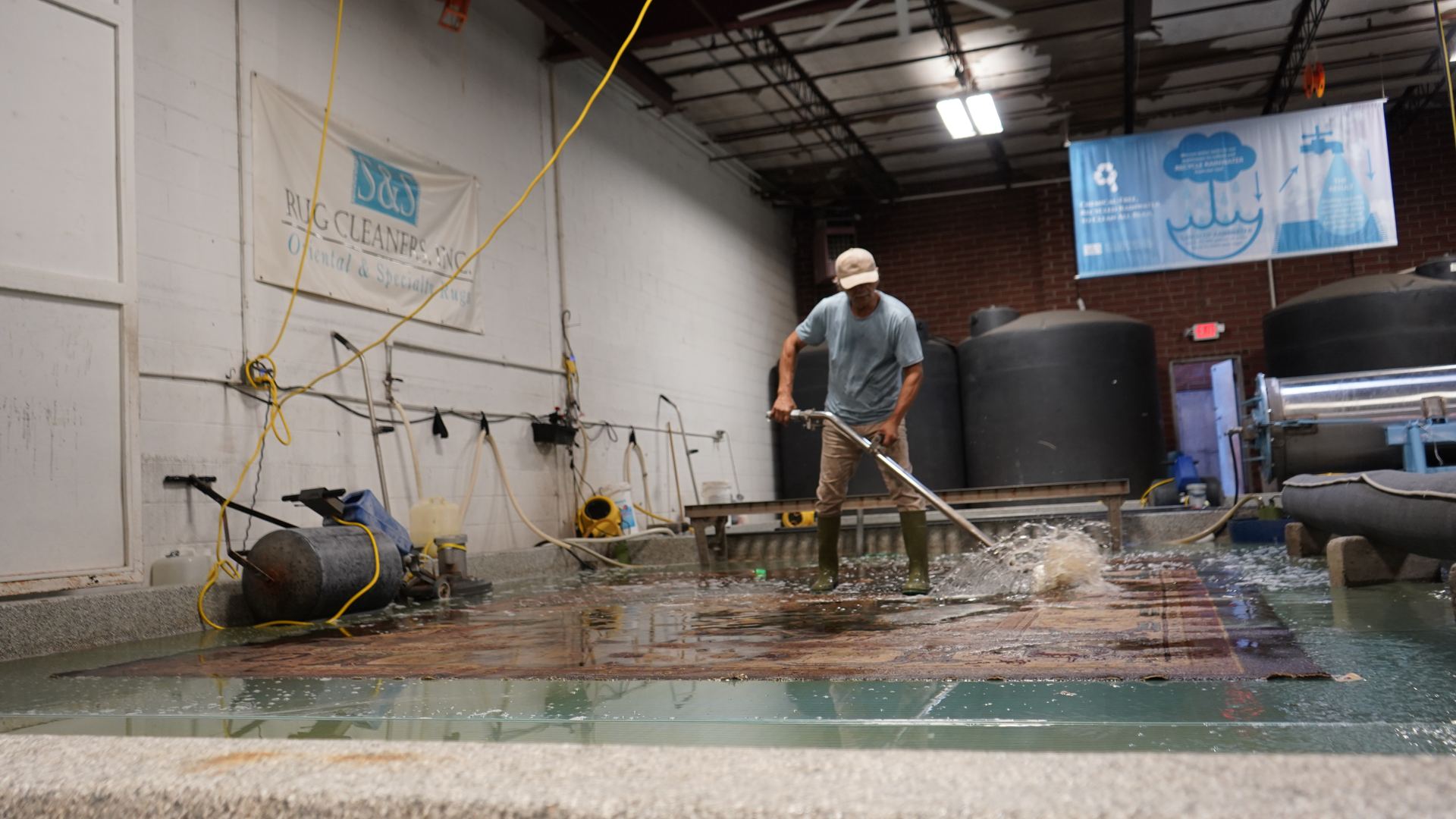
It cannot be done on your living room floor. The rug has to be flushed and rinsed from both sides, which is why it is done in a wash facility. Here is how our rug cleaning process handles a bleeding rug, step by step.
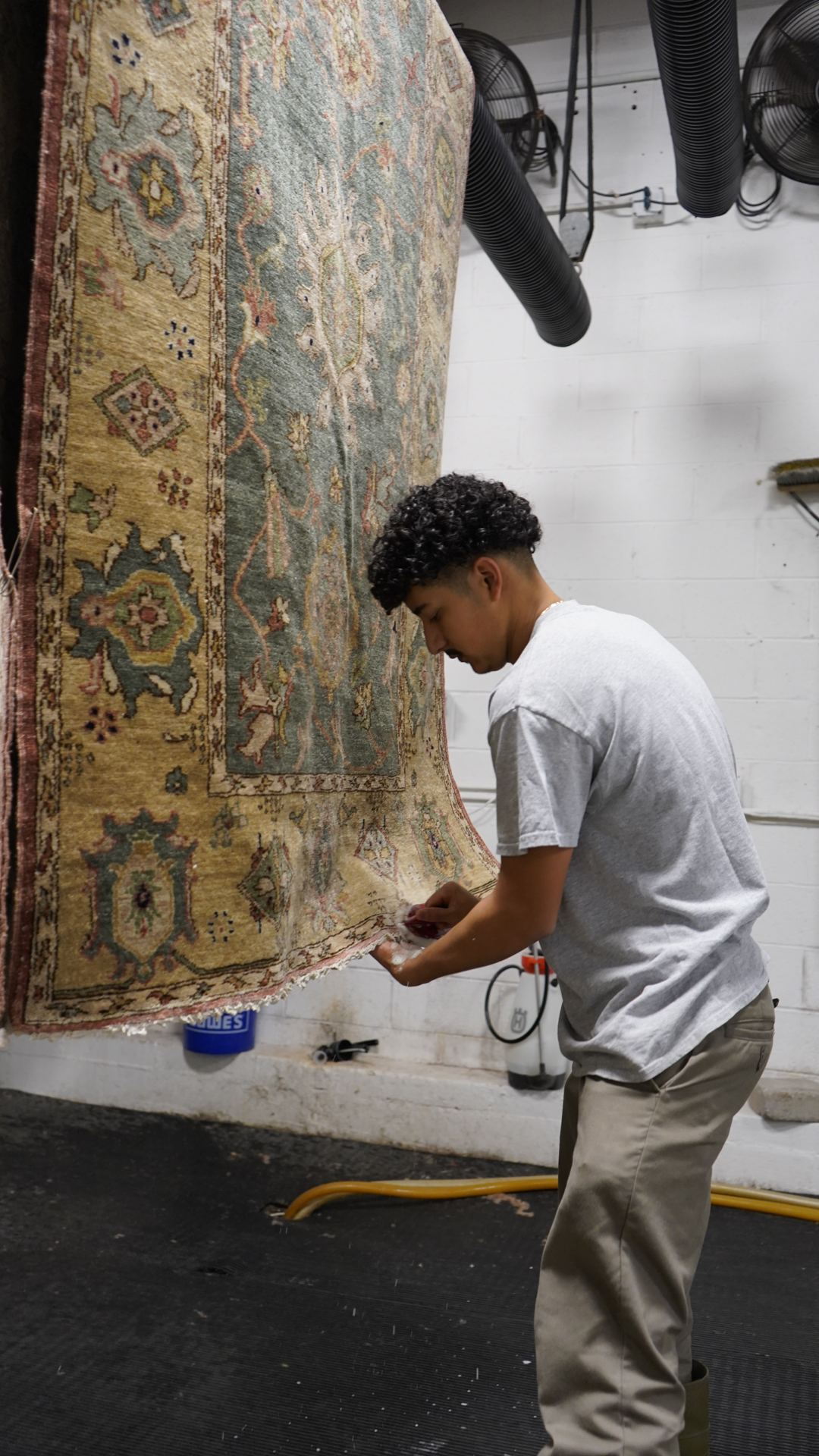
Every color is tested for stability. We also identify the fiber and ask what caused the bleed. A fresh water spill and a bleed baked in by a steam machine are treated very differently.
A dye-setting treatment is applied first. It helps the original colors hold in place so they do not release more dye while the rug is being worked on.
The stained areas are treated with solutions made to release migrated dye, then flushed with cool water. Small bleeds are often worked by hand, one section at a time. Stubborn areas may need more than one pass.
The rug is rinsed until the water runs clear. Then water is extracted and the rug is dried quickly with steady airflow, so nothing has time to move again. A final inspection checks every border and pattern line. Learn more about how rugs are dried after washing.
Easier to correct
Recent bleeds, wool pile, plain-water causes, small areas, and rugs that have had no heat or chemicals applied.
Harder to correct
Old, dried bleeds, silk and viscose, steam or hot-water damage, pet urine areas, and stains treated with bleach or strong spotters.
An honest shop will tell you this up front: many dye bleeds improve a great deal, and some come out fully. A few can only be reduced. No one can promise a perfect result before testing the rug.
Cost works the same way. Color run removal is usually quoted per rug after inspection. The price depends on size, fiber, and how much hand work is needed. It is normally added to a full wash. For a sense of wash pricing, see what rug cleaning costs in Atlanta. Our inspections and quotes are free, so you know the plan and the price before any work starts.
Already tried one of these? Do not worry, and do not try a second fix on top of it. Tell us exactly what was used when you request a free quote. Knowing the product helps us choose the safest way to correct it.
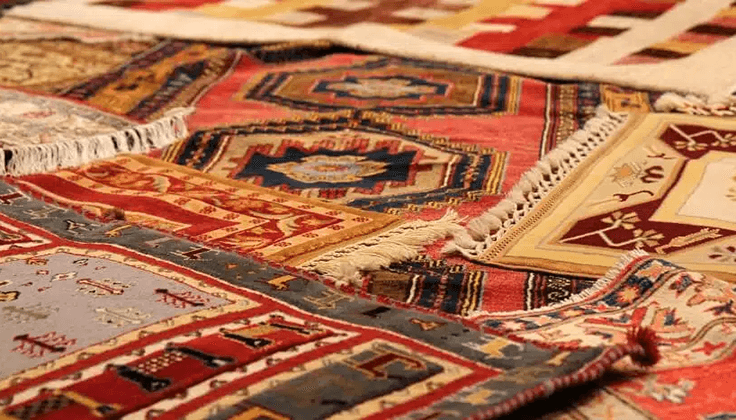
Most dye bleed is preventable. Start by treating spills the right way: blot, use cool water only, and spot test first. Our wool rug cleaning guide covers safe products and methods in detail.
Keep potted plants off rugs, or set them on a raised stand with a saucer. Slow leaks under planters are a leading cause of color run and dry rot. Clean pet accidents quickly, and have old spots treated with proper pet urine removal before they damage the dyes.
Ask about a fiber protector too. A treatment like MicroSeal helps spills bead up on the surface, which gives you more time to blot before liquid soaks in.
Finally, choose a cleaner who tests dyes before washing. Ask how they handle a rug that fails the test. A specialist in Oriental and Persian rug cleaning will have a clear answer: stabilize first, wash cool, and dry fast.
Color bleeding happens when unstable dye meets water, heat, or the wrong cleaner. If it is fresh, blot, keep it cool, and dry it fast. If it has dried, stop treating it at home. More water and stronger products almost always make dye run worse.
The sooner a bleeding rug is tested and treated, the better the result. Request a free quote with a few photos, or call (404) 355-2126. We have been restoring rugs in Atlanta for 30+ years. Rugs 8' x 10' and larger get free pickup and delivery across metro Atlanta, and you save 15% when you drop off.
Common questions about dye bleed, color run, and how to fix it
Send us photos for a free color run assessment. We offer free pickup and delivery on rugs 8' x 10' and larger in metro Atlanta, and 15% off when you drop off.

Rug fringe repair explained: why fringe unravels, safe DIY fixes, pro options like overcasting and refringing, typical costs, and the mistakes to avoid.
Read MoreHow to clean a jute rug the right way: vacuum dry, blot spills fast, and never steam clean or wash natural fiber rugs. Plus sisal and seagrass care tips.
Read MoreLearn how to clean a shag rug without matting, shedding, or mildew: safe vacuuming, spot cleaning steps, mistakes to avoid, and when to call an Atlanta pro.
Read More