Top Benefits of Rug Pads
Learn the top benefits of rug pads — improved safety, floor protection, increased comfort, and longer rug life. Expert insights from S&S Rug Cleaners.
Read MoreFree Pickup & Delivery (8' x 10'+, Metro Atlanta) | 15% Off Drop-Off Service

Why fringe wears out, what you can safely do at home, and which professional repair keeps your rug from coming apart.
Fringe is usually the first part of a rug to show its age. It gets caught in the vacuum, stepped on, and dragged under chairs. A few loose strands seem harmless. But on a hand-knotted rug, fringe is not trim. It is the end of the rug's structure, and when it goes, the knots start to go with it.
The good news: fringe damage is one of the most fixable problems a rug can have, especially when you catch it early. This guide explains how fringe is built, how to tell how bad the damage is, what you can safely do at home, and what professional rug repair involves.
We will also cover typical costs and the common mistakes that turn a small fix into a big one.
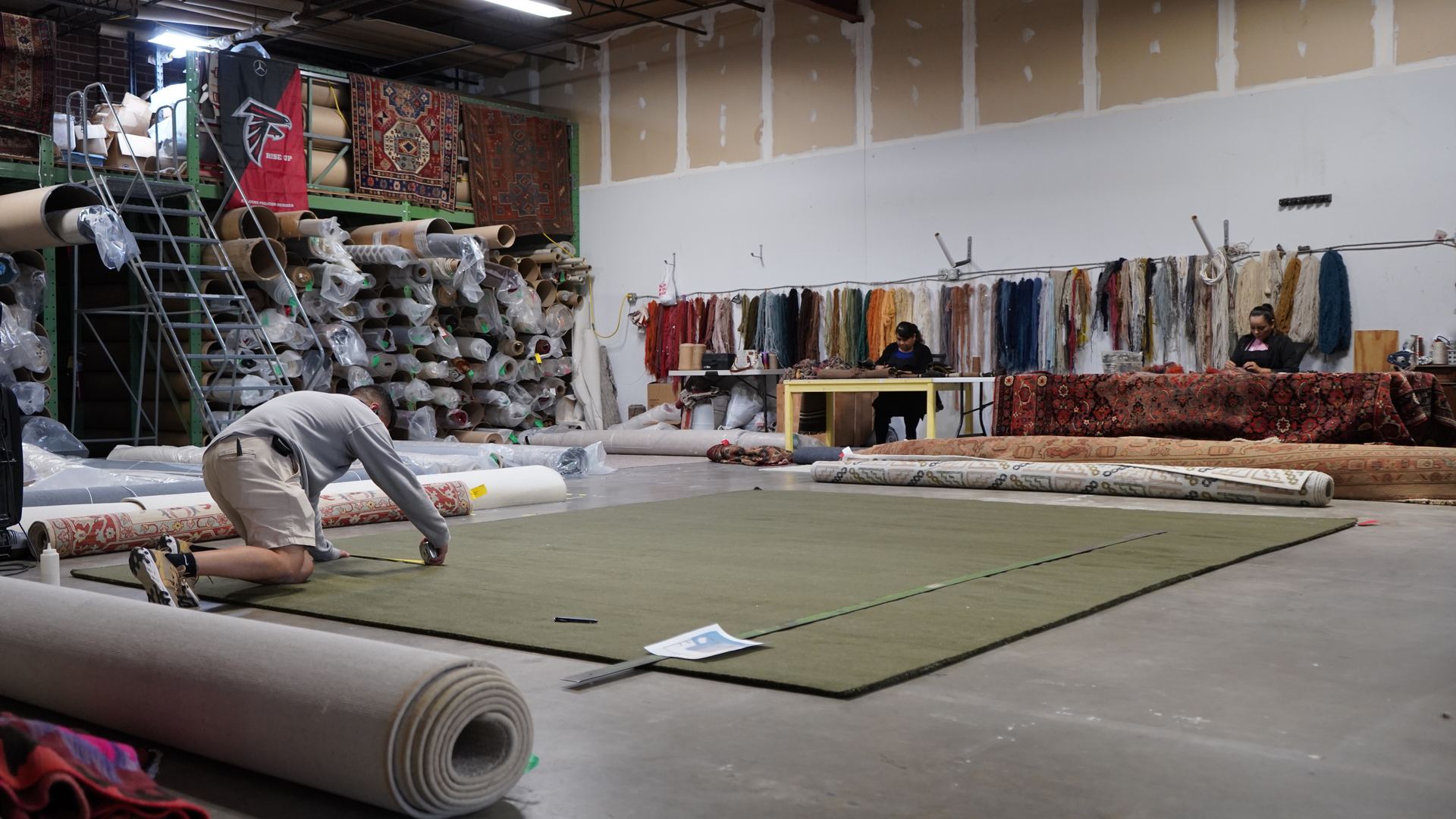
Most professional fringe work falls between about $10 and $30 per linear foot. That is typical market pricing in metro Atlanta. Your actual price depends on the rug and is set after a free inspection.
On a hand-knotted rug, the fringe is made of the warp threads. Warps are the long cotton or wool strings that run the full length of the rug. Every knot of pile is tied around them. At each end, the weaver leaves the warps hanging loose. That is your fringe.
So when fringe wears down to the rug's edge, nothing holds the last rows of knots in place. They loosen, then fall out one row at a time. On machine-made and tufted rugs, the fringe is usually a separate strip sewn on. It can fall off, but it rarely takes the pile with it. Not sure which you have? Flip a corner over. If the design shows clearly on the back, it is likely hand-knotted.
Most of these causes are easy to fix once you know them. That is why every repair we do starts with a question: what caused this, and how do we keep it from happening again?
Lay the rug flat and look closely at both ends. Where your rug falls on this scale decides what kind of repair it needs, and how much it will cost.
The fringe is tangled, dingy, or uneven, but every strand is still there. The knotted band at the base is tight. This is mostly a cleaning job. A proper wash straightens and brightens the fringe.
Some strands are broken short or missing. You can see gaps, but the end of the rug is still sealed by a woven band or knots. This is the ideal time to stabilize. The fix is small and quick.
The fringe is gone in places, right down to the pile. The end band has started to open up. Loose knots may pull out if you tug the pile. The rug now needs a new fringe or a secured end.
Rows of knots have already fallen out. The border design is shrinking or ragged. Repair now means rebuilding the foundation and possibly reweaving lost rows. It is still fixable, but it is the most involved stage.
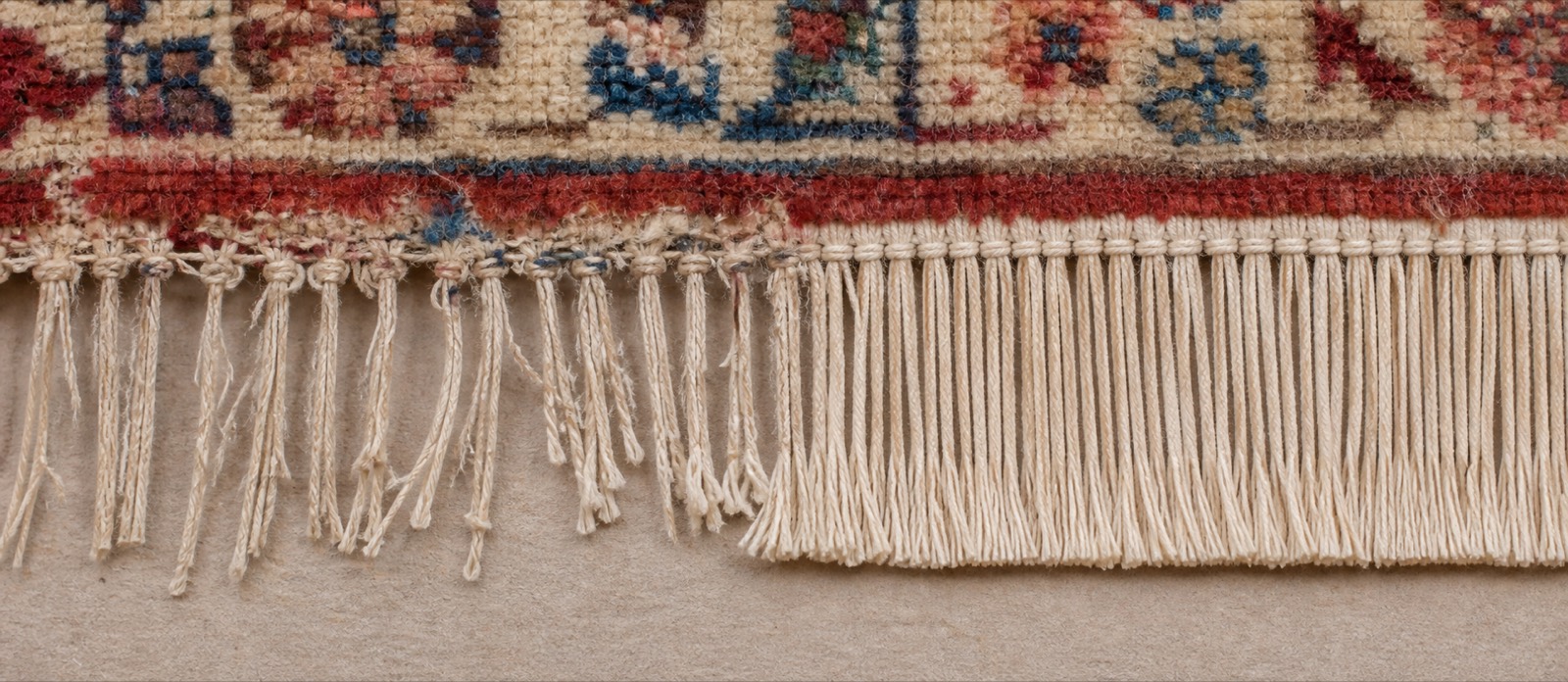
Stage 3 fringe damage (left) and the same kind of rug end after professional fringe restoration (right).
The jump from stage 2 to stage 4 can take just a year or two in a busy room. Catching it early is the single best way to keep the repair simple. If you are unsure which stage you are looking at, a quick inspection answers it. Send photos with a free rug quote request and we will tell you what we see.
Home fixes cannot rebuild fringe. But they can slow the damage a lot. These steps are safe for almost any rug:
Stop vacuuming the fringe. Vacuum the pile up to the fringe, then stop. Turn off the beater bar, or use a suction-only attachment near the ends.
Comb, don't pull. Use a wide-tooth comb or your fingers to straighten tangles. Work from the tips toward the rug, gently.
Snip single strays only. If one thread sticks out far past the rest, trim just that thread with sharp scissors. Never trim the whole fringe shorter.
Add a rug pad. A good pad stops the rug from creeping and takes pressure off the ends. Here's why rug pads matter.
Rotate the rug. Turn it 180 degrees every six months so one end does not take all the traffic.
Tie off an open end, temporarily. If knots are starting to slip, a few loose hand stitches with cotton thread can hold them until a pro can look. Keep stitches loose so they do not pucker the rug.
What about "fringe whitening" or scrubbing brown fringe with bleach? Skip it. Bleach weakens cotton warps, and brown fringe is often a sign of a deeper moisture problem. Browning usually improves with a full professional rug cleaning, where the fringe is washed along with the rest of the rug.
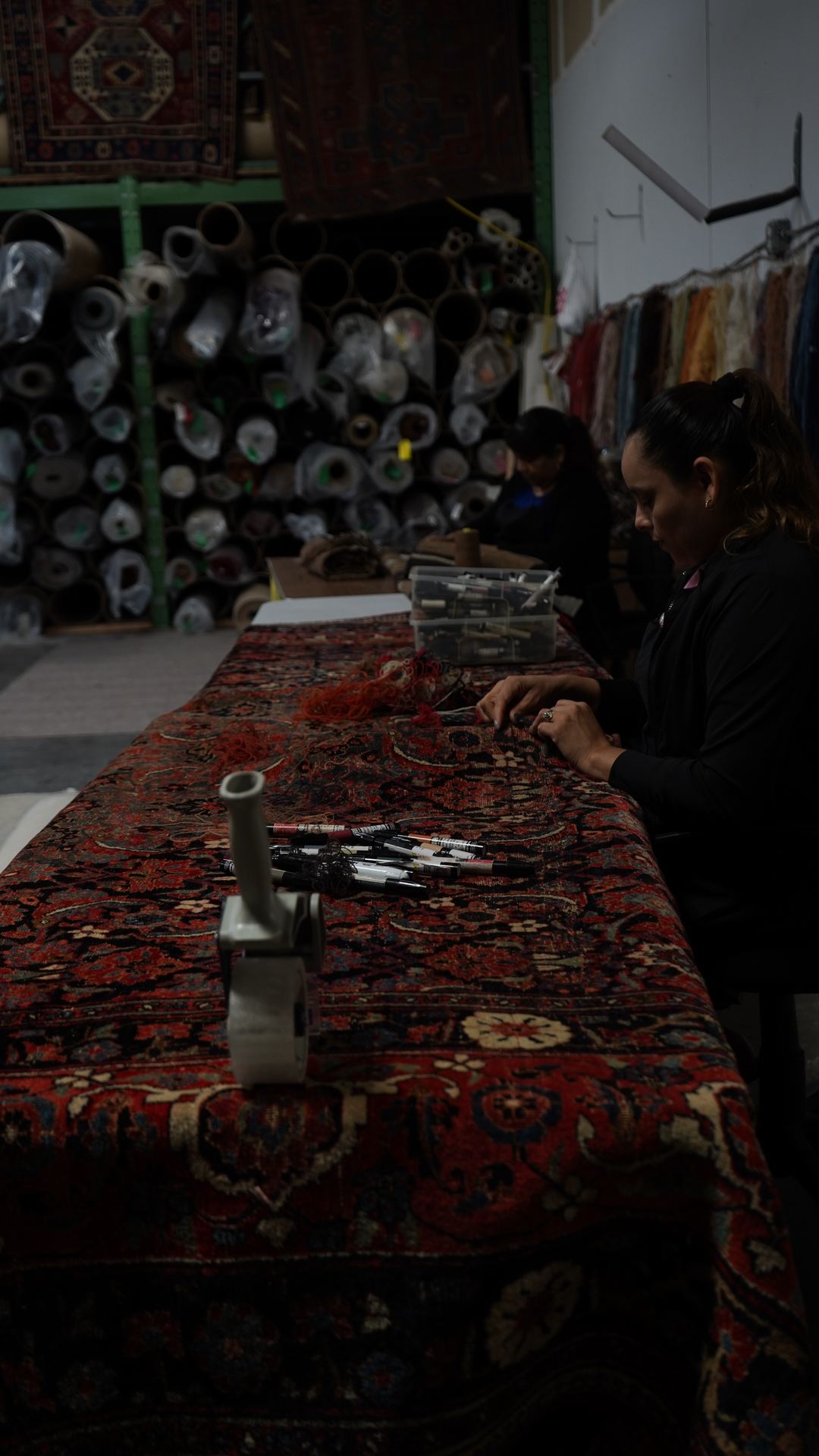
A professional repairer matches the method to the stage of damage and the value of the rug. The work is done by hand, one warp at a time, with thread matched to the original.
Here are the four main options, from simplest to most involved. For a wider look at the craft, read our rug repair and restoration guide.
| Repair Method | What It Does | Best For |
|---|---|---|
| Overcasting / fringe stop | Hand-sews a tight band across the base of the fringe to lock the last row of knots | Stage 2 – thinning fringe, ends still intact |
| Fringe filling | Ties or stitches new cotton strands into gaps so the fringe looks full again | Patchy fringe with a sound base |
| Sewn-on fringe | Secures the end, then machine- or hand-sews a new fringe strip to the back | Stage 3 on decorative or machine-made rugs |
| Hand-knotted refringing | Inserts new warp threads into the foundation and knots them like the original | Stage 3–4 on valuable hand-knotted rugs |
Sometimes the honest answer is to remove the fringe on purpose and finish the end with a secure hand-sewn binding, sometimes called a kilim end. That is very different from cutting it off at home. The end is locked first, so no knots can escape.
Fringe repair is almost always paired with a wash. Repairers need a clean rug to match colors, and a dirty fringe hides damage. For Persian and other fine rugs, our Oriental rug cleaning and repair teams work under one roof, so the rug makes one trip. Antique pieces get extra care; see can you repair antique rugs.
Fringe work is priced by the linear foot of rug end, not by square foot. An 8' x 10' rug has two 8-foot ends, so both ends together are 16 linear feet. Across the market, most fringe work runs roughly $10 to $30 per linear foot.
What pushes the price down
Early-stage damage, one end only, sewn-on fringe, and machine-made rugs.
What pushes the price up
Hand-knotted refringing, lost rows of knots, silk or very fine weaves, and antique rugs.
Here is the math that matters. Stabilizing a thinning fringe is one of the cheapest repairs a rug can get. Waiting until the pile starts falling out can multiply the cost several times over. For a full breakdown of repair prices, see how much rug repair costs in Atlanta.
Every repair is quoted after inspection, and the quote is free. For rugs 8' x 10' and larger in metro Atlanta, pickup and delivery are free, and you save 15% when you drop a rug off yourself.
If you have already tried a home fix, that's fine. Tell us what was used when you request a quote. Glue and tight stitches can usually be removed; it just helps to know before we start.
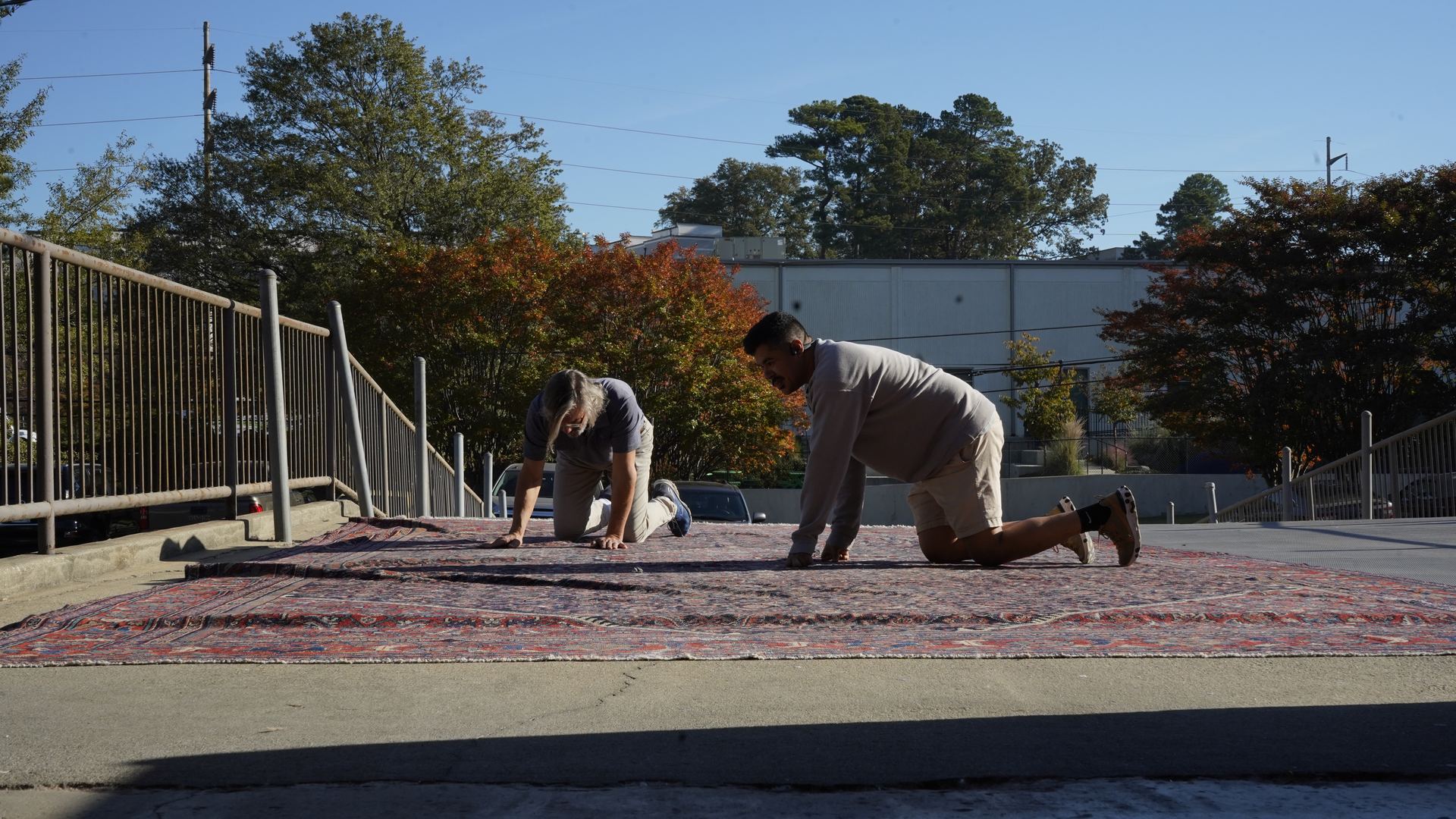
Once the fringe is repaired, a few habits keep it that way. Keep the vacuum off the ends. Rotate the rug twice a year. Put a properly sized pad underneath; a custom-cut rug pad stops just short of the edges so the ends lie flat.
Keep furniture legs off the fringe where you can. Check the ends under sofas and beds a few times a year for moth activity. If you see webbing or bare spots, act fast with moth removal and prevention.
Finally, have the rug cleaned on a regular schedule. Grit works into the fringe and grinds the fibers from the inside. A wash every one to three years, depending on traffic, keeps fringe soft and strong. When it is time, ask to have the fringe checked on the same visit.
Unraveling fringe is a structural problem, not a cosmetic one. Caught early, it is a small, affordable fix that protects the whole rug. Left alone, it slowly eats into the border and design. At home, keep the vacuum away, comb gently, and never cut, glue, or bleach.
Want to know exactly what your rug needs? Request a free quote with a photo of each end, or call (404) 355-2126. With 30+ years of rug repair in Atlanta, we will give you a straight answer.
Common questions about fixing frayed and unraveling rug fringe
Send us a photo of your rug's ends for a free repair quote. We offer free pickup and delivery on rugs 8' x 10' and larger in metro Atlanta, and 15% off when you drop off.


Learn the top benefits of rug pads — improved safety, floor protection, increased comfort, and longer rug life. Expert insights from S&S Rug Cleaners.
Read MoreDiscover 5 expert tips to keep your area rugs clean and well maintained — from vacuuming and spills to rug pads and professional cleaning.
Read MoreExplore eight common types of rugs — wool, silk, synthetic, hand-knotted, flatweave, and more — with tips on what to consider before purchasing your next rug.
Read More