Can You Use a Carpet Cleaner on a Persian Rug?
Learn why consumer carpet cleaners are not recommended for Persian rugs and how professional rug cleaning preserves delicate fibers, colors, and structure.
Read MoreFree Pickup & Delivery (8' x 10'+, Metro Atlanta) | 15% Off Drop-Off Service
Discover what antique rug repair involves and how professionals restore value, structure, and beauty to cherished rugs.
Antique and heirloom rugs are often treasured possessions with sentimental and monetary value. Because of their age, construction, and intricate designs, repair requires specialized knowledge and skill. Proper repair preserves original materials and avoids further damage, while improper methods may cause lasting harm.
Antique rugs present unique challenges that distinguish their repair from work on newer pieces. Decades of use create wear patterns that modern rugs haven't experienced, while the materials themselves have aged in ways that affect how repairs must be approached. The fibers have become more brittle, the dyes have mellowed, and the foundation may have weakened in areas invisible from the surface.
Matching materials proves particularly difficult with antiques. The wool from sheep raised a century ago differs from today's wool in texture, luster, and how it accepts dye. Vegetable dyes used in traditional rug making create colors impossible to replicate exactly with modern synthetic alternatives. Skilled restorers often source antique wool from damaged rugs beyond repair, maintaining a library of salvaged materials for future projects.
Technique matters as much as materials. Antique rugs were woven using methods specific to their region and era—the knot style, thread count, and finishing techniques all carry historical significance. Repairs that ignore these details may be structurally sound but aesthetically jarring, diminishing both the rug's beauty and its value as a collectible piece.
Perhaps most importantly, antique rug repair requires judgment about what should be preserved versus corrected. Some wear tells the story of the rug's life and adds to its character. Over-restoration can make an antique look artificially new, removing the patina collectors prize. The best restorers balance structural integrity with historical authenticity.
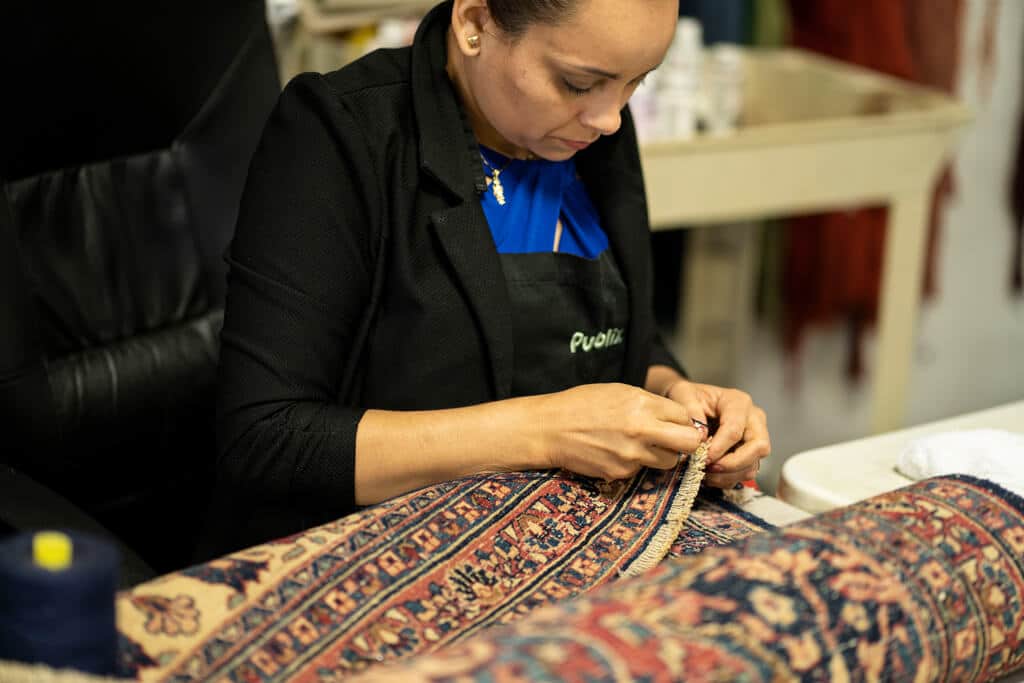
Antique rug repair refers to the process of correcting damage such as holes, fringe loss, unraveling, or broken foundation threads in a way that honors the rug's original design and materials. Repair work can include reweaving, fringe reconstruction, foundation stabilization, and color-matched restoration that blends with the rug's pattern.
The key distinction between antique rug repair and modern rug repair lies in the approach to materials and techniques. Antique rugs were often made with hand-spun wool, natural vegetable dyes, and construction methods that varied by region and era. A skilled repair specialist must understand these historical techniques to match the original craftsmanship. Using modern synthetic materials or machine techniques on an antique rug can look out of place, feel different to the touch, and potentially decrease the rug's value. At S&S Rug Cleaners, our repair work is designed to be virtually invisible while preserving the rug's authenticity and collectible value.
Preserving Heritage & Value
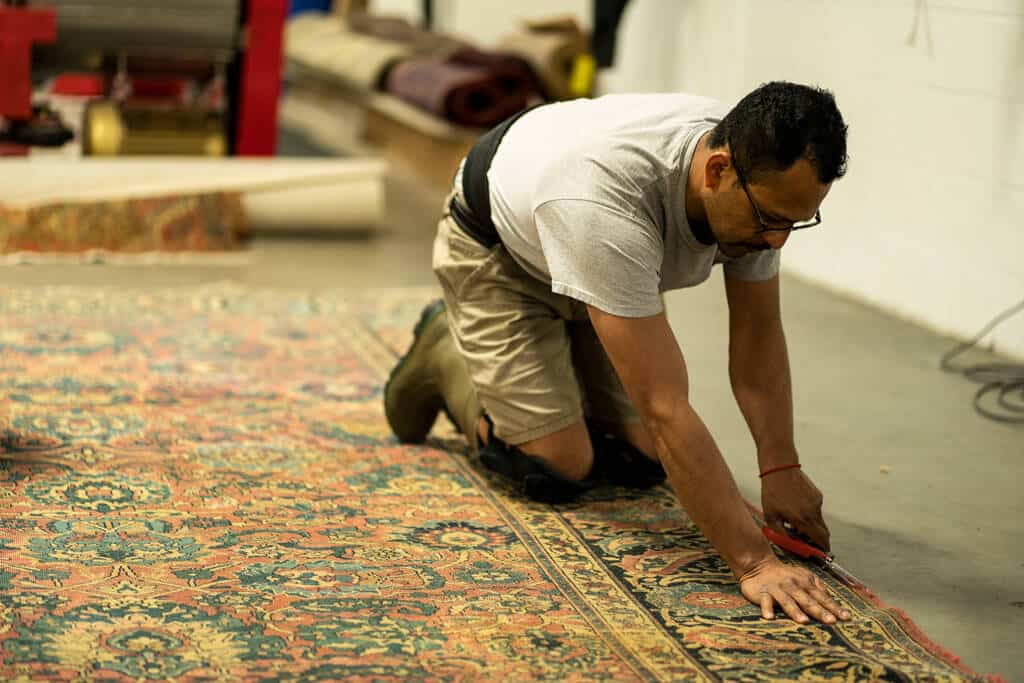
Each antique rug is unique — a piece of history woven by hand, often generations ago. Professional repair respects this heritage by using traditional techniques and materials that maintain the rug's authenticity and market value.
Our skilled artisans handle a wide range of restoration services to bring your treasured rugs back to life.
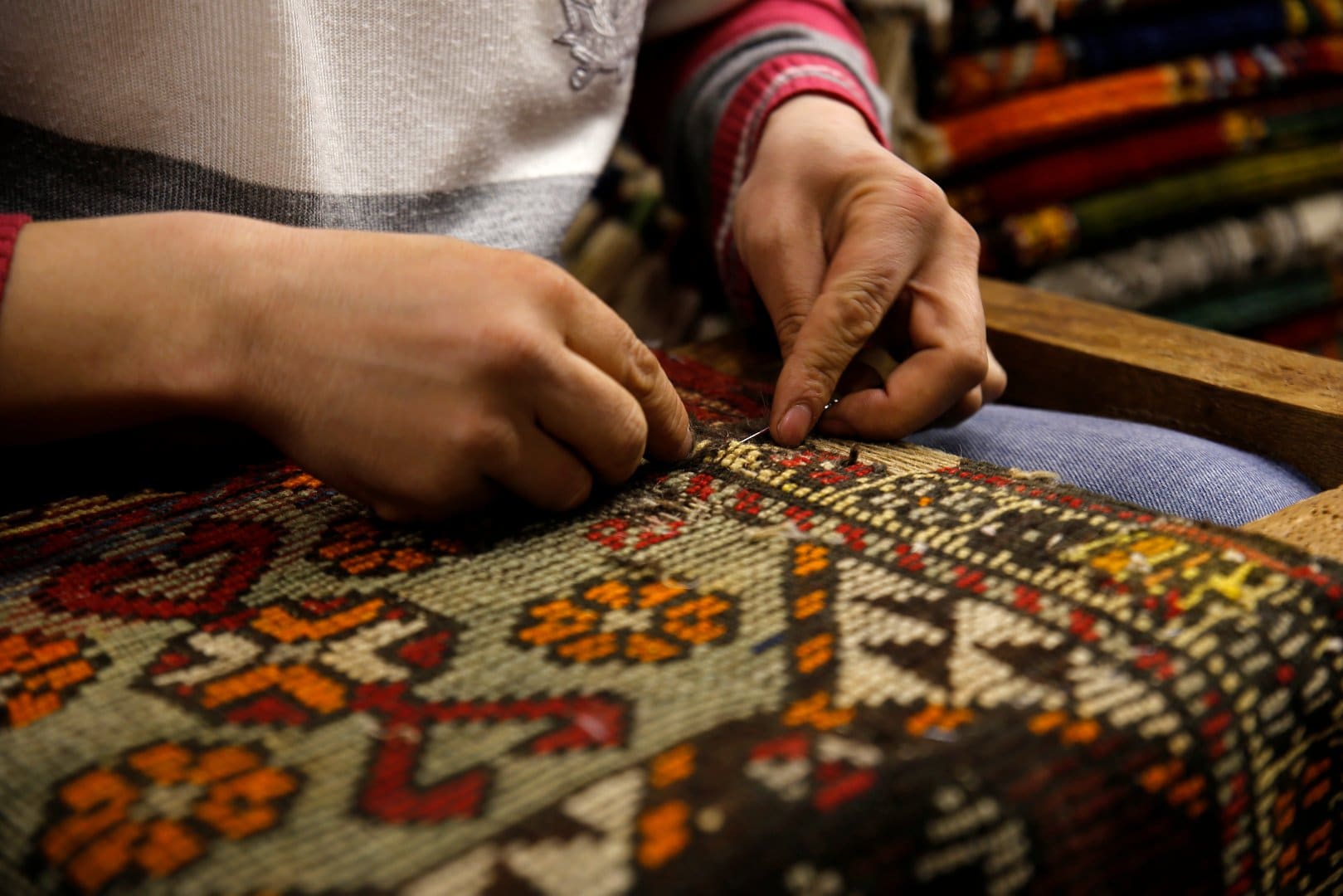
Repairing missing or damaged knots by re-creating them by hand in the original pattern.
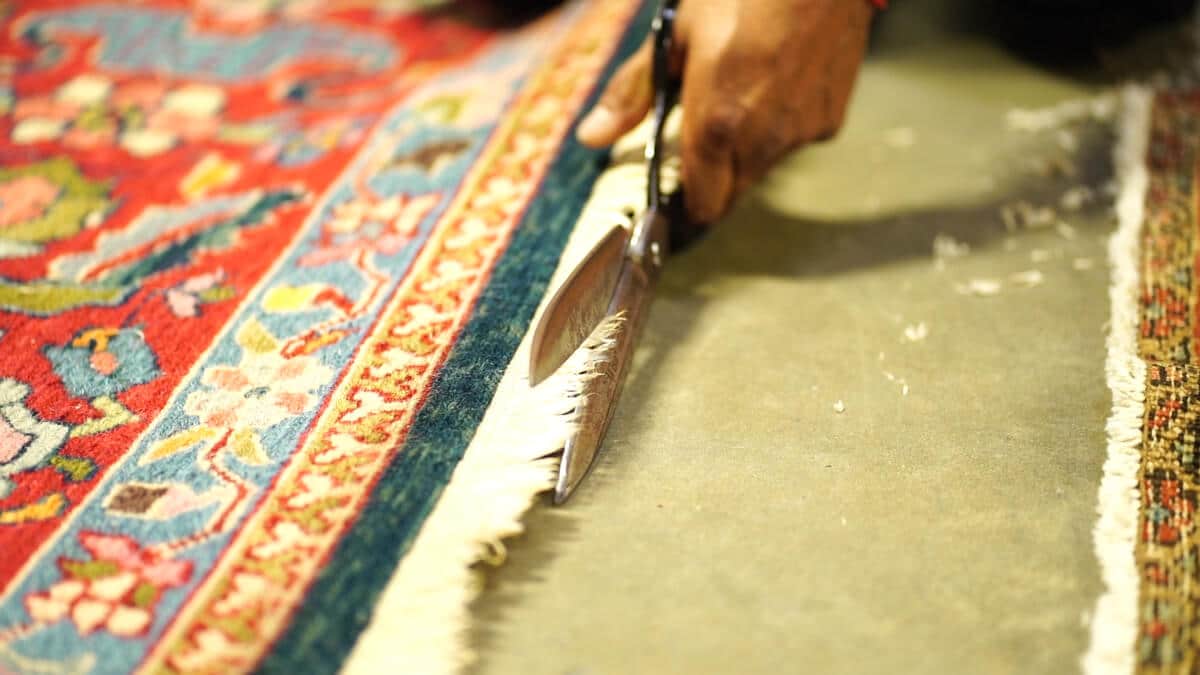
Reconstructing worn or missing fringe to match original style and structure.
Patching or reweaving holes and tears to restore strength and appearance.
Reinforcing the rug's warp and weft threads to prevent further unraveling.
Rebuilding worn edges or binding to extend rug life and prevent further damage.
Blending threads to match original dyes for seamless, invisible repairs.
Antique rugs develop characteristic damage patterns based on their age, use, and storage history. Understanding these common issues helps owners recognize when intervention can preserve their rug before minor problems become major structural failures.
Fringe isn't decorative—it's the exposed ends of the warp threads that form the rug's structural backbone. When fringe wears away, the rug begins unraveling from its edges. Professional repair may involve securing existing fringe, adding new fringe that matches the original, or creating a protective overcasting to prevent further loss. Our guide to rug fringe repair compares the options.
The selvedge—the wrapped or bound edge running along the rug's sides—protects the foundation from unraveling laterally. Years of foot traffic and vacuum cleaners wear through this protective edge. Restorers can rewrap damaged selvedges using wool or cotton in colors matched to the original binding.
Moths, burns, and mechanical damage create holes that expand if left untreated. Small holes may be darned or patched using matching materials. Larger areas require reweaving—reconstructing the foundation and pile using techniques appropriate to the rug's origin and age.
High-traffic zones lose their pile over time, exposing the foundation beneath. Skilled artisans can reweave these areas knot by knot, matching the original pattern, colors, and knot density. Quality reweaving is virtually invisible from the front while reinforcing the rug's structure.
Sun fading, water damage, and chemical exposure can alter colors unevenly across a rug's surface. Color correction involves carefully reintroducing dye to faded areas or reducing intensity where colors have remained too strong. This delicate work requires understanding both chemistry and the artistic intent of the original design.
Antique and handmade rugs are delicate and unique. Using incorrect tools, heat, mechanical tension, or inappropriate thread can permanently alter the rug's structure and reduce its value.
Professionals trained in traditional methods evaluate fiber content, knot types, dyes, and construction before deciding on repair technique — ensuring each repair honors the rug's original craftsmanship.
Traditional Techniques: Hand-knotting and weaving methods passed down through generations
Authentic Materials: Using period-appropriate fibers and dyes for seamless repairs
Value Preservation: Protecting both sentimental worth and market value
Consider professional repair when you notice any of these signs. Delaying repair can lead to more extensive damage and higher costs later.
Edges are unraveling
Holes or tears are present
Fringe is missing or damaged
The rug no longer lays flat
Structural threads are breaking
Loss of design integrity
Get answers to common questions about antique rug repair and restoration.
The decision between restoration and replacement depends on several factors: the rug's monetary value, its sentimental significance, the extent of damage, and realistic expectations for the outcome. Not every antique rug can or should be restored, but many damaged pieces retain enough integrity to justify professional repair.
Rugs with historical significance, exceptional craftsmanship, or strong family connections often warrant restoration even when repair costs approach the rug's market value. The goal isn't always financial—preserving a piece of heritage has its own worth. Conversely, severely damaged rugs with limited artistic merit may not justify extensive restoration expenses.
Our professional rug repair services include honest assessments of what restoration can achieve for your specific piece. We'll explain the expected outcome, timeline, and investment required so you can make an informed decision. For a deeper understanding of repair options, explore our complete guide to rug repair and restoration.
If you own an antique rug showing signs of wear or damage, request a free evaluation. We'll examine your rug's condition, discuss your goals, and recommend whether restoration makes sense for your situation.
Don't let damage diminish your treasured heirloom. Our expert craftsmen use traditional techniques to repair and restore antique rugs to their former glory. Contact us today for a free evaluation.
Learn why consumer carpet cleaners are not recommended for Persian rugs and how professional rug cleaning preserves delicate fibers, colors, and structure.
Read MoreComplete guide to rug repair and restoration in Atlanta — antique repair, moth damage, fringe work, and when to restore vs replace. Expert advice from S&S.
Read MoreHow much does rug repair cost in Atlanta? Typical prices for fringe, edge and reweaving work, what drives your quote, and when repair beats replacing.
Read More