How Atlanta's Climate Affects Area Rugs
Atlanta's humidity, pollen, and climate can damage area rugs over time. Learn how weather affects rugs and when professional cleaning is recommended.
Read MoreFree Pickup & Delivery (8' x 10'+, Metro Atlanta) | 15% Off Drop-Off Service
Expert guidance on identifying damage, understanding repair options, and preserving your rugs for years to come.
Area rugs often carry memories and value — whether they're heirlooms, Oriental pieces, or everyday floor coverings. Over time, wear, tears, fringe loss, holes, or damage from pets and heavy traffic can compromise a rug's beauty and performance. Proper rug repair and rug restoration restores structure, appearance, and longevity.
This comprehensive guide covers everything Atlanta homeowners need to know about antique rug repair, oriental rug restoration, common damage types, and when professional restoration makes sense. Whether you have a valuable Persian carpet or a treasured family heirloom, understanding your repair options helps you make informed decisions.
While often used interchangeably, rug repair and rug restoration describe different levels of intervention on fine rugs. Understanding the distinction helps you communicate your needs and set appropriate expectations — and because repairs are performed alongside a full rug cleaning process, your rug comes back both structurally sound and freshly washed.
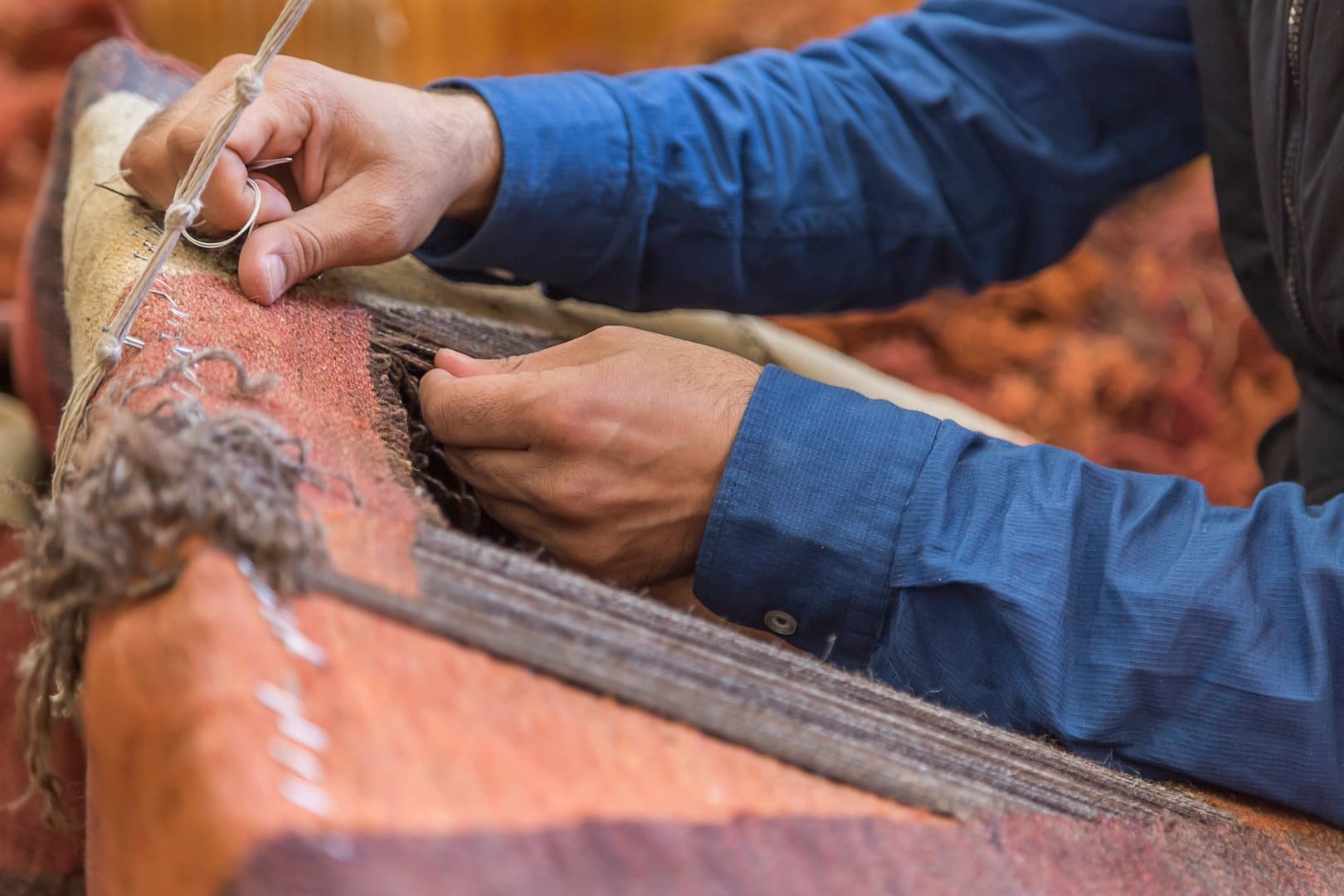
Professional rug restoration requires skilled craftspeople who understand traditional weaving techniques and can match original materials.
Rug repair addresses specific, localized damage. It's a targeted intervention that fixes a particular problem without necessarily addressing the rug's overall condition. Think of it as fixing what's broken.
Rug restoration is a comprehensive process that returns a rug toward its original condition. It addresses structural integrity, appearance, and overall health of the piece — often combining multiple repair techniques with cleaning and preservation.
For valuable antique rugs and oriental rugs, restoration is often the better choice because it considers the piece holistically. A skilled restorer evaluates not just the visible damage, but underlying structural issues that could cause future problems. Learn more about our professional rug repair services.
Just like cleaning removes dirt and allergens, timely repair prevents small problems from becoming bigger ones. Left unaddressed, holes can widen, fringe can unravel, and structural weakness can spread across the rug. Repair helps:
Hand-knotted rugs, in particular, are susceptible to progressive damage because the warp and weft threads that form the rug's foundation can begin to deteriorate once exposed. A small tear or worn area allows dirt, moisture, and friction to reach these structural fibers, accelerating breakdown. What starts as a minor repair can become a major restoration project—or worse, irreversible damage—if ignored too long. At S&S Rug Cleaners, we recommend having any visible damage assessed promptly, even if you're not ready to commit to repairs right away.
Maintain pattern integrity and original aesthetic appeal
Prevent further damage from spreading across the rug
Especially important for fine, antique, or heirloom rugs
Stop unsightly tears from growing larger over time
Repair and restoration preserve both function and sentiment — keeping your treasured rugs beautiful for generations.
Understanding the type of damage your rug has helps determine the appropriate repair approach. Here are the most common issues we see at our Atlanta facility.
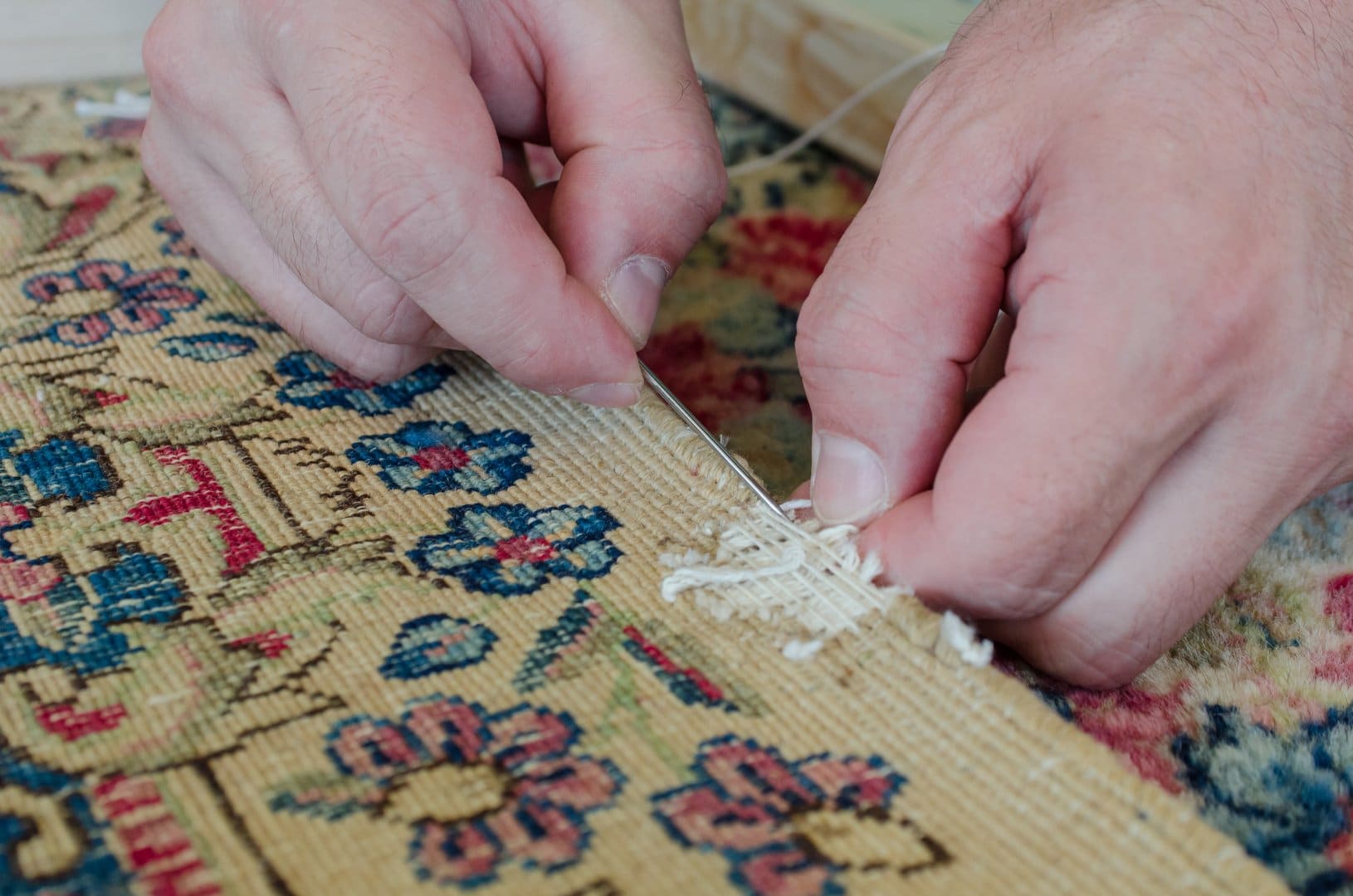
A Persian rug undergoing professional restoration. Identifying the specific type of damage is the first step toward proper repair.
Fringe damage is one of the most common issues we encounter. The fringe on hand-knotted rugs isn't decorative — it's the exposed warp threads that form the rug's structural foundation. When fringe wears away, unravels, or breaks off, it can allow the rug body to begin deteriorating from the ends inward.
Fringe repair options include reinforcing existing fringe, replacing damaged sections, or in some cases, adding new fringe that matches the original. For valuable antique rugs, we recommend preservation techniques that stabilize existing fringe rather than replacement, maintaining the rug's historical integrity. See how to fix unraveling rug fringe for what is safe to do at home.
Common causes: Vacuum cleaner beater bars, foot traffic, pets pulling at fringe, age-related deterioration
Holes and tears can result from accidents, furniture legs, pet damage, or gradual wear. Left unrepaired, holes expand as surrounding threads loosen and unravel. The repair approach depends on hole size, location, and the rug's construction method.
Small holes may be rewoven to match the original pattern, while larger damaged areas might require patching with compatible material. For hand-knotted oriental rugs, skilled artisans recreate the original knotting pattern to ensure repairs blend seamlessly with the surrounding design.
Common causes: Pet chewing or scratching, furniture legs, burns, insect damage, drops or tears from moving
Sun exposure causes colors to fade, particularly in rugs placed near windows or under skylights. Color bleeding occurs when dyes migrate from one area to another, usually due to water damage or improper cleaning. Both issues affect a rug's visual appeal and can diminish its value.
Professional color restoration involves carefully matching and applying dyes to faded areas. For color bleeding, specialized techniques can sometimes reverse or minimize the damage. Prevention through proper rug care and maintenance is always preferable to correction.
Common causes: Direct sunlight exposure, water damage, improper cleaning products, age-related dye degradation
Moth larvae feed on natural fibers like wool and silk, creating characteristic bald spots and tunnels in the rug pile. Moth damage often occurs in dark, undisturbed areas — under furniture, along walls, or on rugs in storage. The damage can spread rapidly if not addressed.
Repairing moth damage requires first eliminating any active infestation, then reweaving the affected areas. For oriental and Persian rugs, this means recreating the original knotting pattern with matched colors. Severe moth damage affecting large areas may require extensive restoration work.
Warning signs: Bald patches, visible larvae or cocoons, loose fibers, sandy residue beneath rug
Rug edges that unravel or curl need reinforcement to prevent the damage from spreading into the rug body. Professional binding or overcasting can stabilize damaged edges.
Damage to warp and weft threads compromises structural integrity. Foundation repairs require careful reinforcement so the rug lays flat and holds its shape properly.
Antique rug repair and oriental rug restoration require specialized knowledge and techniques that differ significantly from repairing modern machine-made rugs.
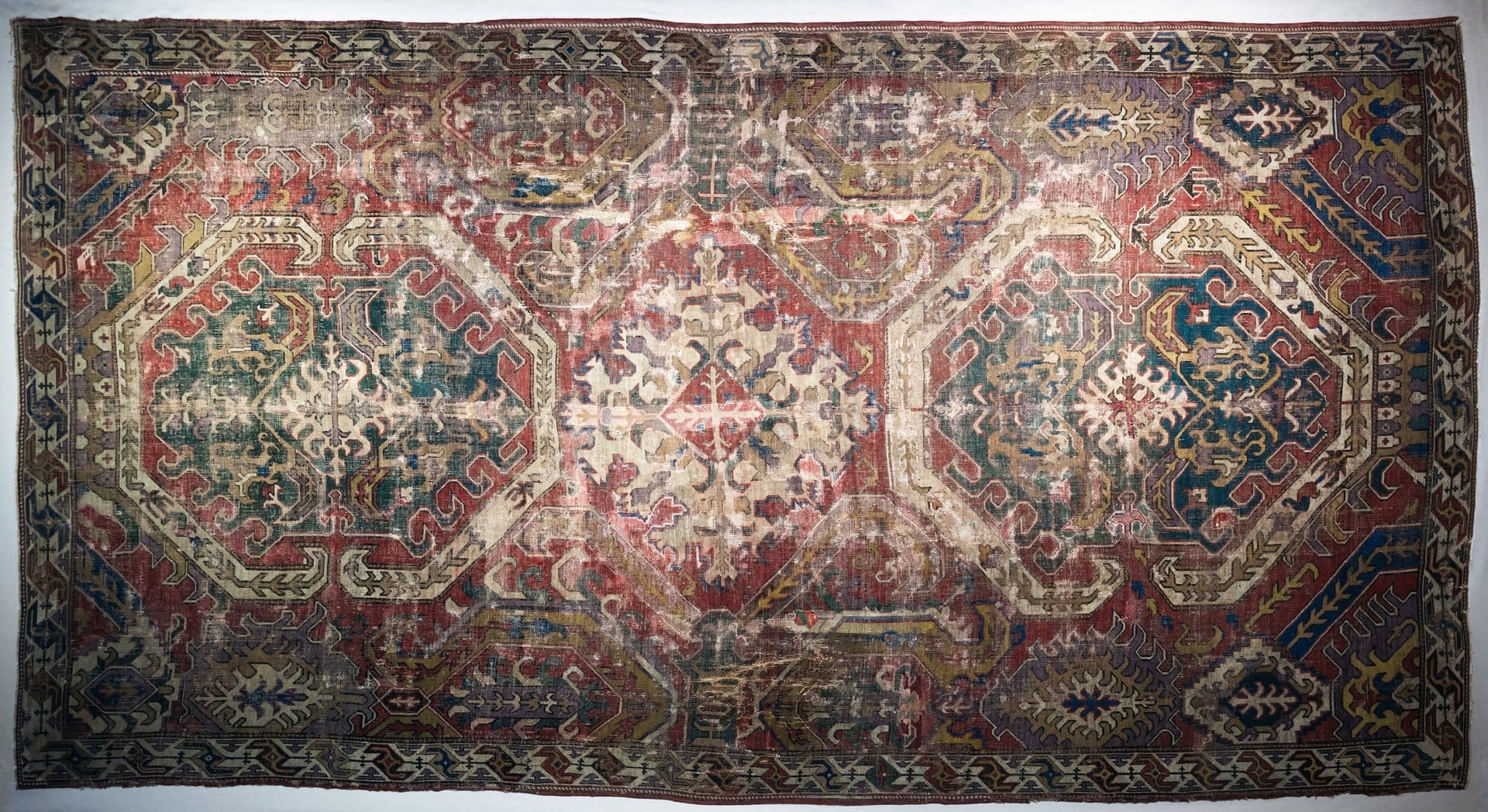
Antique and oriental rugs feature intricate hand-knotted patterns that require expert restoration techniques to preserve their value and beauty.
Antique rugs — typically those over 80-100 years old — were created using natural dyes, hand-spun fibers, and traditional weaving techniques that are rarely replicated today. The materials have aged and developed a patina that contributes significantly to the rug's character and value.
Using modern materials or techniques on an antique piece can actually decrease its value rather than enhance it. Professional restorers understand how to work with aged fibers, match natural dyes, and preserve the rug's historical integrity while addressing structural damage.
For valuable pieces, we recommend consulting with specialists in oriental and Persian rug cleaning and care before undertaking any repair work.
Using period-appropriate dyes or carefully aged modern equivalents that blend with the rug's existing colors.
Hand-knotting repairs using the same techniques and knot density as the original construction.
Sometimes stabilizing damage is preferable to full repair, especially for museum-quality pieces.
Recording the rug's condition and all work performed to maintain provenance and value records.
Never attempt DIY repairs on antique or valuable oriental rugs. Improper techniques, wrong materials, or amateur color matching can permanently reduce a rug's value by 50% or more. Even well-intentioned repairs using modern materials can mark a rug as "altered," significantly impacting its worth to collectors and appraisers.
Deciding between repair and replacement depends on several factors. In many cases, professional rug repair breathes new life into a piece at a fraction of the replacement cost.
Sentimental or Monetary Value
The rug holds special meaning or is worth preserving
Localized Damage
Damage is limited to specific areas that can be addressed
Original Materials Matter
You want to preserve original materials and design integrity
Low-Cost & Widely Available
The rug is inexpensive and easy to replace
Extensive Damage
Damage affects large areas beyond practical repair
Cost-Prohibitive Repair
Repair cost approaches the value of a replacement
Not sure? Consulting a professional helps you make the right choice based on condition and budget.
Get expert adviceSimple fixes like trimming loose threads or stabilizing small snags can be done at home, but attempting major repair without training can cause serious problems:
Distort pattern or weave
Loosen warp/weft structure
Cause permanent fiber damage
Reduce rug value significantly
Leaving major repair to trained rug craftspeople protects your investment and ensures high-quality results that will last for years.
At S&S Rug Cleaners, we follow a proven restoration process that ensures quality results. Here's what to expect when you bring your rug to our Atlanta facility:
Complete assessment of damage and fiber type to understand the scope of work needed.
Clear outline of the restoration process including estimated time and cost before work begins.
Careful reinforcement of foundation threads to ensure structural integrity.
Expert reweaving or stitching with carefully matched colors for seamless results.
Final finishing to blend repairs and restore the rug's original appearance.
Professionals use tools and techniques that protect delicate or antique textiles while ensuring lasting repair.
For over four decades, S&S Rug Cleaners has been Metro Atlanta's premier destination for professional rug repair and restoration.
Decades of specialized rug repair expertise serving Atlanta families
All work performed at our Atlanta facility by our trained specialists
Professional-grade tools designed specifically for delicate rug restoration
We stand behind every repair with our satisfaction guarantee
When you entrust your rug to S&S Rug Cleaners, you're working with craftspeople who understand both the technical aspects of rug construction and the sentimental value these pieces hold. Many of our customers are multi-generational — we've repaired rugs for grandparents and now their grandchildren.
Our rug repair services are performed entirely in-house at our Atlanta facility. We never outsource work, ensuring consistent quality and accountability for every repair we undertake.
After restoration, ongoing care helps prolong the results:
Use gentle suction to remove dirt and debris without damaging fibers or repairs.
Rotate the rug to balance traffic wear and sun exposure evenly across the surface.
Blot spills immediately to prevent stains from setting into the fibers.
Quality rug pads reduce strain under furniture and prevent slipping.
These simple practices complement repairs and slow future damage — helping your rug last for generations.
Common questions about rug repair, restoration, and our services
Whether you need minor repairs or full restoration, our expert team is here to help preserve your treasured rugs for generations to come.
Free Pickup & Delivery on 8' x 10'+ rugs in Metro Atlanta. Save 15% with in-store drop-off.

Atlanta's humidity, pollen, and climate can damage area rugs over time. Learn how weather affects rugs and when professional cleaning is recommended.
Read MoreLearn how antique rugs are repaired by professionals. Discover common repair types, when to restore your rug, and why expert techniques matter.
Read MoreHow much does rug repair cost in Atlanta? Typical prices for fringe, edge and reweaving work, what drives your quote, and when repair beats replacing.
Read More