How to Clean a Shag Rug Without Matting or Shedding
Learn how to clean a shag rug without matting, shedding, or mildew: safe vacuuming, spot cleaning steps, mistakes to avoid, and when to call an Atlanta pro.
Read MoreFree Pickup & Delivery (8' x 10'+, Metro Atlanta) | 15% Off Drop-Off Service
Natural fiber rugs break every rule you know about rug cleaning. The method that rescues a wool rug is the one that destroys a jute rug.
Jute and sisal rugs are cleaned dry. That is the single most important thing to know about them. These plant fibers are highly absorbent and lose strength when saturated, so the steam cleaning, shampooing, and hose-it-down-outside methods that work on wool and synthetics will leave a natural fiber rug stained, stiff, shrunken, or smelling of mildew.
The good news: routine care is genuinely easy, and most natural fiber rugs stay beautiful for years on nothing more than correct vacuuming and fast spill response. This guide covers the right way to clean jute, sisal, and seagrass, how to handle spills and pet accidents, what to do if a rug has already been soaked, and when a natural fiber rug is worth professional attention.

For deep soil, odor, or a rug that has already been soaked, specialized low-moisture cleaning is the only safe option. Call (404) 355-2126 and describe the fiber and the problem, or request a free quote — we will tell you honestly whether the rug is worth treating.
Jute, sisal, and seagrass are plant fibers — cellulose rather than the protein fiber that makes up wool. Cellulose behaves very differently when it gets wet, in four ways that all work against you:
Wet plant fibers expand, and as they dry they contract unevenly. A soaked natural fiber rug commonly comes back smaller, buckled, or out of square, and the tight flat weave never fully relaxes again.
Jute in particular contains natural tannins and lignin that dissolve in water and travel to wherever the rug dries last. This is why a small spot cleaned with too much water leaves a brown ring far larger than the original spill — the stain is the rug's own color, pulled to the edge of the damp area.
A dense natural fiber weave dries slowly from the inside out. In Atlanta's humidity, that is more than enough time for mildew to establish in the backing, which produces the musty smell that never quite leaves.
Scrubbing a saturated natural fiber rug breaks the fiber bundles, leaving a fuzzy, rough patch where the weave used to be crisp. Unlike a wool pile, that texture damage does not recover.
This is the opposite of how we treat wool and silk, which are fully immersion washed precisely because flushing the foundation is what protects them. Fiber identification is not a formality — it determines the entire method. Our guide to the 8 common rug types can help if you are not certain what you own.
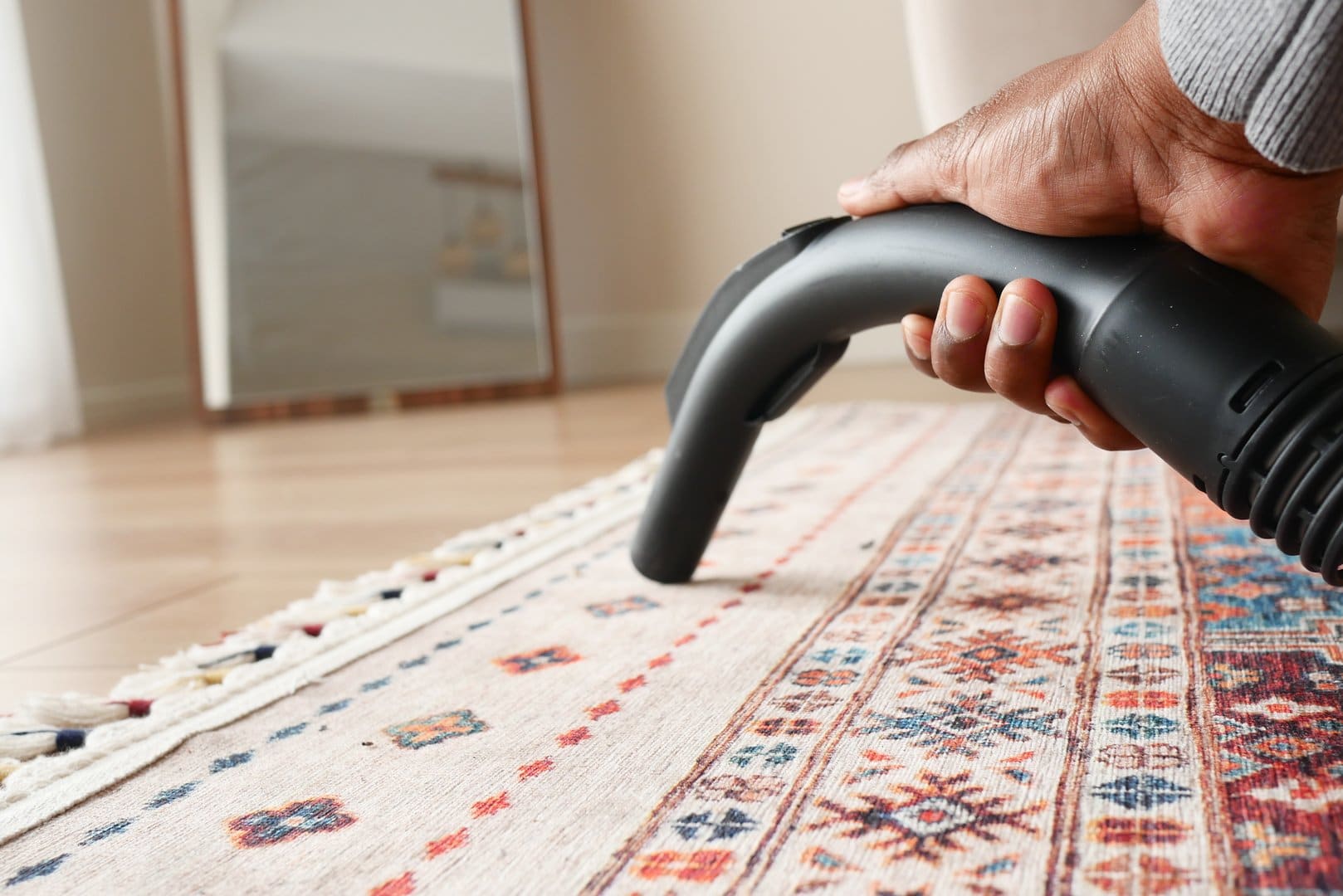
Turn the beater bar off or use a suction-only attachment. A rotating brush catches the loose fiber ends of a natural weave and pulls them into sprouts. Follow the direction the fibers run rather than working across them, and vacuum once or twice a week — natural fiber rugs trap fine grit deep in the weave, and that grit is what actually wears them out.
Grit falls through an open natural weave and collects between the rug and the floor, where it grinds against the backing every time someone walks across. Flip the rug once a month, vacuum the reverse, and vacuum the floor before putting it back.
For rugs you can lift, a vigorous shake outside removes an impressive amount of embedded debris that a vacuum cannot lift. Do it on a dry day and bring the rug straight back inside.
Natural fibers lighten noticeably in sunlight. Rotating the rug 180 degrees every six months evens out both fading and traffic wear, the same habit that extends the life of any rug in our general rug maintenance tips.
The stiff backing of a jute or sisal rug is abrasive enough to scratch hardwood, tile, and luxury vinyl on its own. A pad prevents that, cushions the weave against foot traffic, and improves airflow underneath. Our guide to rug pads and buyer's guide for hardwood floors cover how to choose one, and we cut custom padding to any rug's exact dimensions.
Short fibers working loose from the weave is normal in a natural fiber rug. Snip the sprout flush with the surface using sharp scissors. Pulling it unravels the strand it belongs to and opens a run in the weave.
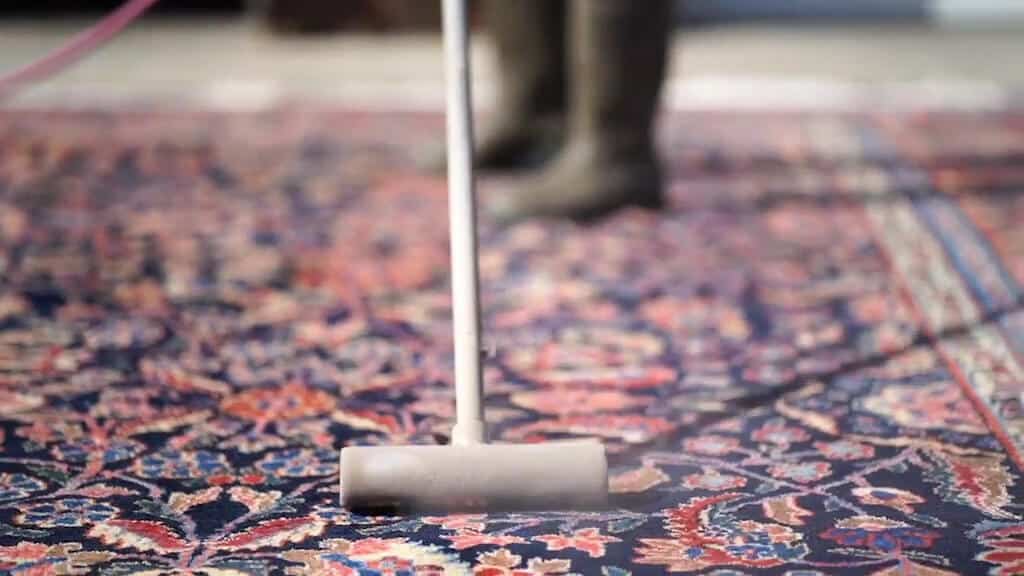
Professional dusting drives out embedded grit with air rather than water — the deep clean a natural fiber rug can actually tolerate.
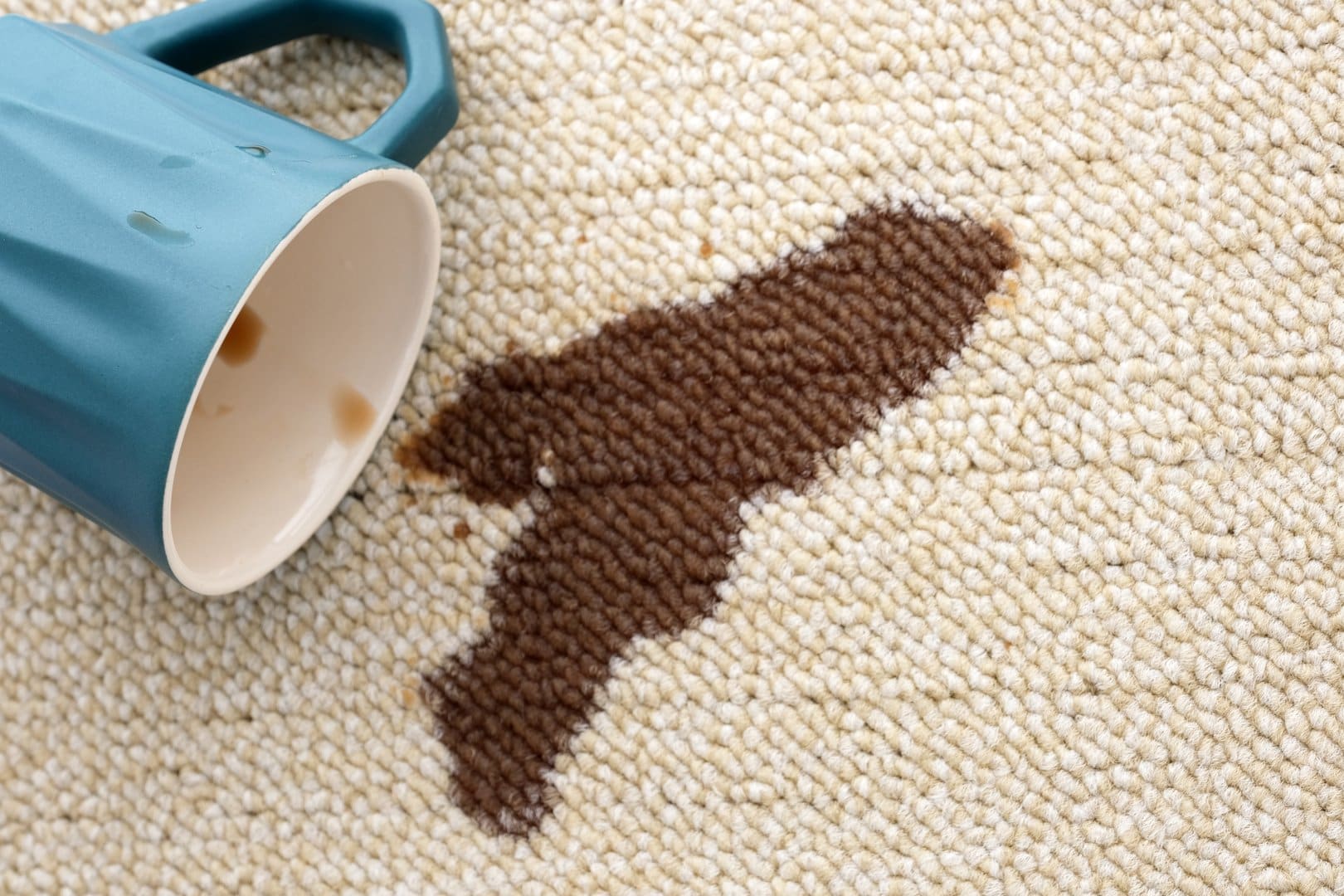
Speed matters far more here than technique, because the fiber starts absorbing on contact. Work from the outside of the spot inward so you do not spread it:
Test any cleaning solution on a hidden corner first and wait for it to dry fully before treating a visible area. If you are dealing with wine or coffee, the approach differs by fiber — our guide to removing red wine and coffee stains covers the wool and synthetic cases where more moisture is safe.
These are the two situations where natural fiber rugs genuinely struggle, and where honest expectations matter more than technique.
For a small, fresh accident, blot everything you can, apply an enzyme cleaner sparingly to the spot only, and dry it aggressively. For a repeat offender's favorite corner or a rug that has been wet for more than a day, be realistic: replacement is often the sensible answer for an inexpensive jute rug, and that is worth knowing before you spend money on treatment. On wool and other washable fibers, by contrast, professional pet urine and odor removal resolves contamination that looks hopeless.
If a leak or flood is what soaked the rug, the response window is the same for every fiber — see what to do with a water-damaged rug in the first 48 hours, and our guide to drying a rug correctly for the airflow setup that actually works.
All three are cleaned dry, but they differ enough in durability and stain behavior to be worth telling apart:
| Fiber | Feel & Durability | Cleaning Notes |
|---|---|---|
| Jute | Softest of the three, least durable; best in bedrooms and low-traffic rooms | Most prone to browning and water marks; the least forgiving of moisture |
| Sisal | Coarse and very durable; handles hallways, entries, and stairs | Highly absorbent and stains readily; treat spills within seconds, not minutes |
| Seagrass | Smooth, slightly waxy, hard-wearing | The natural coating repels liquid briefly, giving you the most reaction time — but it also resists cleaning agents |
Placement is the best protection for all three: keep natural fiber rugs out of bathrooms, entryways exposed to rain, basements, and anywhere near a dining table with young children. Our guide to choosing the right rug for a bedroom covers where these fibers genuinely shine.
Keep water away from natural fiber rugs and they are among the easiest rugs to live with: vacuum both sides with the beater bar off, blot spills the moment they happen, use a pad, and rotate twice a year. Reach for a steam cleaner or a garden hose and you will do more damage in ten minutes than a year of foot traffic.
Not sure what your rug is made of, or whether it can be saved? Send us a photo through our free quote form or call (404) 355-2126. Thirty years of identifying fibers means we can usually tell you what you have — and whether professional cleaning is worth it — before you spend a dollar. See our Atlanta rug cleaning cost guide for what professional care runs, and professional vs DIY rug cleaning for when each makes sense.
Common questions about caring for natural fiber rugs
Fiber determines the method, and the wrong method is what ruins rugs. Send us a photo and we'll identify it, tell you how it should be cleaned, and quote it — free, with no obligation.

Learn how to clean a shag rug without matting, shedding, or mildew: safe vacuuming, spot cleaning steps, mistakes to avoid, and when to call an Atlanta pro.
Read MoreLearn how to clean a silk rug safely: what to do after a spill, what destroys silk fibers, and when to call a pro. Expert silk rug care from S&S Rug Cleaners.
Read MoreViscose rug cleaning done wrong causes brown stains and matted pile. Learn safe at-home steps, mistakes to avoid, and when an Atlanta rug needs a pro.
Read More