How to Clean a Viscose Rug Without Browning or Matting
Viscose rug cleaning done wrong causes brown stains and matted pile. Learn safe at-home steps, mistakes to avoid, and when an Atlanta rug needs a pro.
Read MoreFree Pickup & Delivery (8' x 10'+, Metro Atlanta) | 15% Off Drop-Off Service
What silk can safely handle at home, what quietly destroys it, and the moment to stop and call a professional.
Silk is the most beautiful fiber a rug can be made from and the least forgiving. The same qualities that give a silk rug its liquid sheen — fine, smooth, protein-based filaments — also make it vulnerable to water rings, dye bleed, and permanent fiber damage from products that are perfectly safe on wool.
The short version: you can and should maintain a silk rug at home, but you should not deep clean one. This guide covers the maintenance that genuinely helps, the handful of mistakes that cause most of the silk damage we see, and how to tell whether your rug is even silk in the first place — because a surprising number of “silk” rugs are not.
Silk damage is usually not reversible. When you are unsure whether something is safe, the conservative choice — doing nothing until a professional looks at it — is almost always the right one.
This matters more than any cleaning tip in this article. Many rugs sold as “art silk,” “banana silk,” or “bamboo silk” are viscose — a plant-based rayon engineered to imitate silk's sheen at a fraction of the cost. Viscose is not a lesser silk; it is a completely different fiber that behaves in the opposite way when it gets wet.
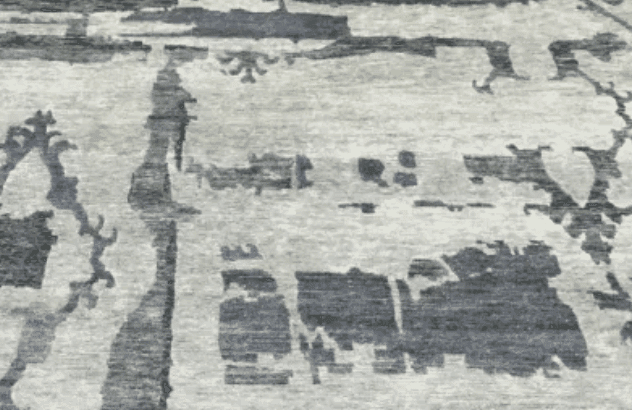
Real silk shrugs off a drop of water on an inconspicuous corner. Viscose reacts badly: the spot stiffens, the fibers mat, and the area often dries lighter or yellowed with a visible ring. If a single drop of plain water leaves a mark, you almost certainly have viscose — and you should stop testing immediately.
Silk warms in your hand and its sheen shifts colour as you change viewing angle. Viscose stays cool to the touch and has a flatter, more uniform shine. Hand-knotted silk also shows fine, tightly packed knots on the back — our guide to identifying quality rugs walks through what to look for.
Fiber identification is quick for someone who handles rugs daily and consequential if you get it wrong. Many fine rugs also blend silk accents into a wool field, which means one rug can need two different cleaning approaches. We identify the fiber as part of every inspection, at no charge, when you request a free rug quote.
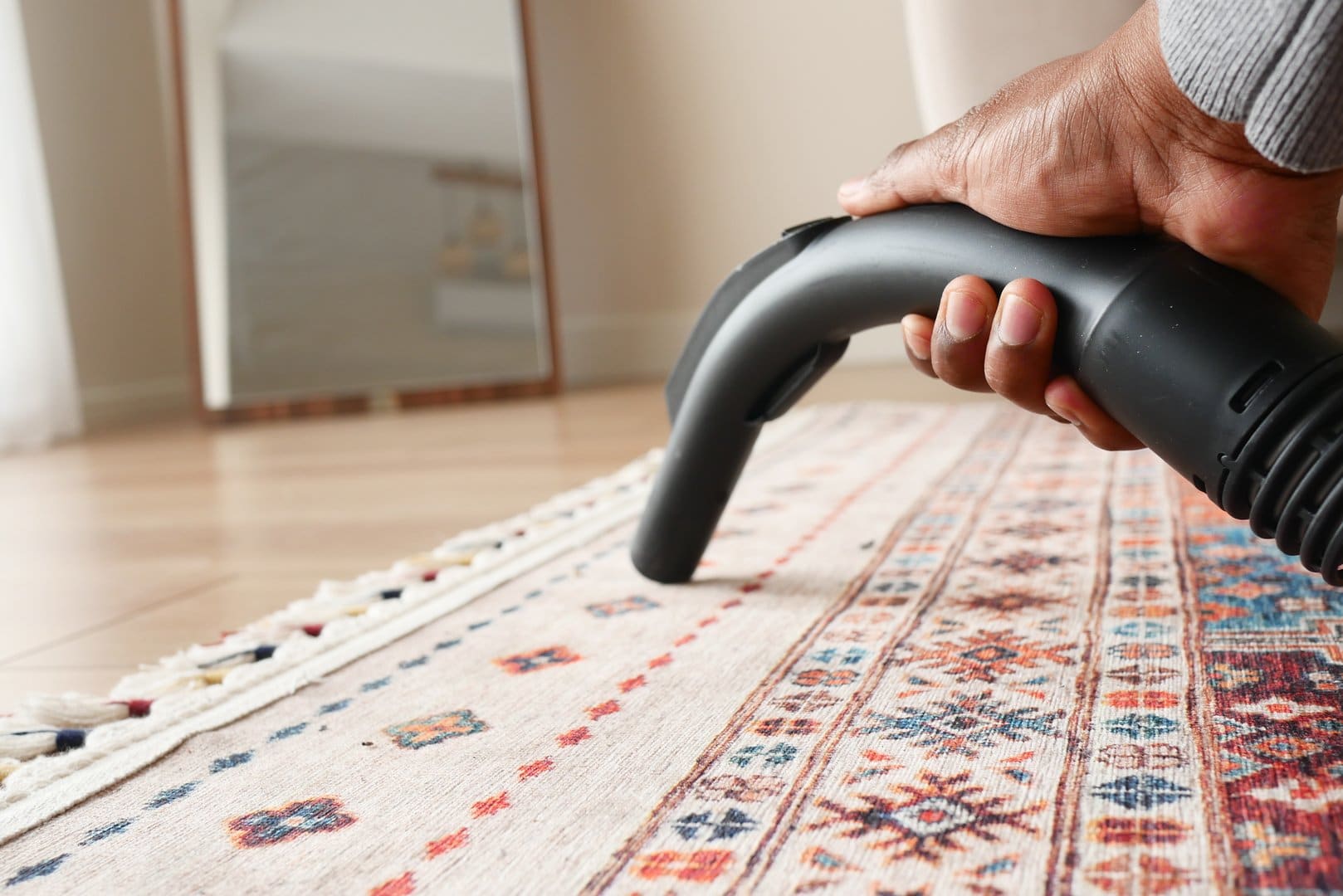
Routine care is where silk rug owners actually make a difference. Grit is the enemy: fine soil works its way to the base of the pile and saws through silk filaments every time someone walks across the rug. Removing that soil regularly does more for the rug's lifespan than any deep clean.
A proper pad matters too. It cushions the foundation, stops the rug sliding, and lets air move underneath — which is worth real money in Georgia, where Atlanta's humidity works on rug fibers year-round. See the benefits of a quality rug pad and our broader rug maintenance tips for the habits that stretch the time between professional washes.
Your goal in the first sixty seconds is to remove liquid, not to remove the stain. Trying to clean the spot is what turns a small accident into permanent damage.
Press a clean, dry, white cloth straight down and lift. Repeat with fresh sections of cloth until no more liquid transfers. Rubbing drives the spill into the foundation and abrades the silk, leaving a fuzzy, distorted patch that no cleaning will restore. Use white cloth only — a coloured towel can transfer its own dye into wet silk.
Do not add water, club soda, vinegar, dish soap, or a spot cleaner. Water alone leaves a ring on silk once it dries, and household products can strip dye or leave residue that attracts soil. Blot, then let the professionals handle the rest.
Urine is the urgent one. It is acidic when fresh and turns alkaline as it dries, and on silk that shift can permanently shift the dye within days. Blot what you can and arrange pet urine and odor removal right away — the sooner a contaminated silk rug is washed, the more colour survives.
Nearly every ruined silk rug that arrives at our shop was damaged by a well-intentioned owner or a general carpet cleaner using something that would have been fine on nylon. These are the ones that matter:
Steam deserves a special mention because it is so often marketed as the premium option — our guide on whether steam cleaning is safe for Oriental rugs explains why hot-water extraction and fine natural fibers are a poor match, and professional vs DIY rug cleaning compares the two approaches directly. Silk is also a favourite meal for pests, so if you see grazed patches or shed casings, treat it as urgent and read up on moth removal and prevention.
Silk is washed closer to the way a couture garment is handled than the way carpet is cleaned. Every step is chosen to keep the fiber from staying wet and to keep dyes exactly where the weaver put them.
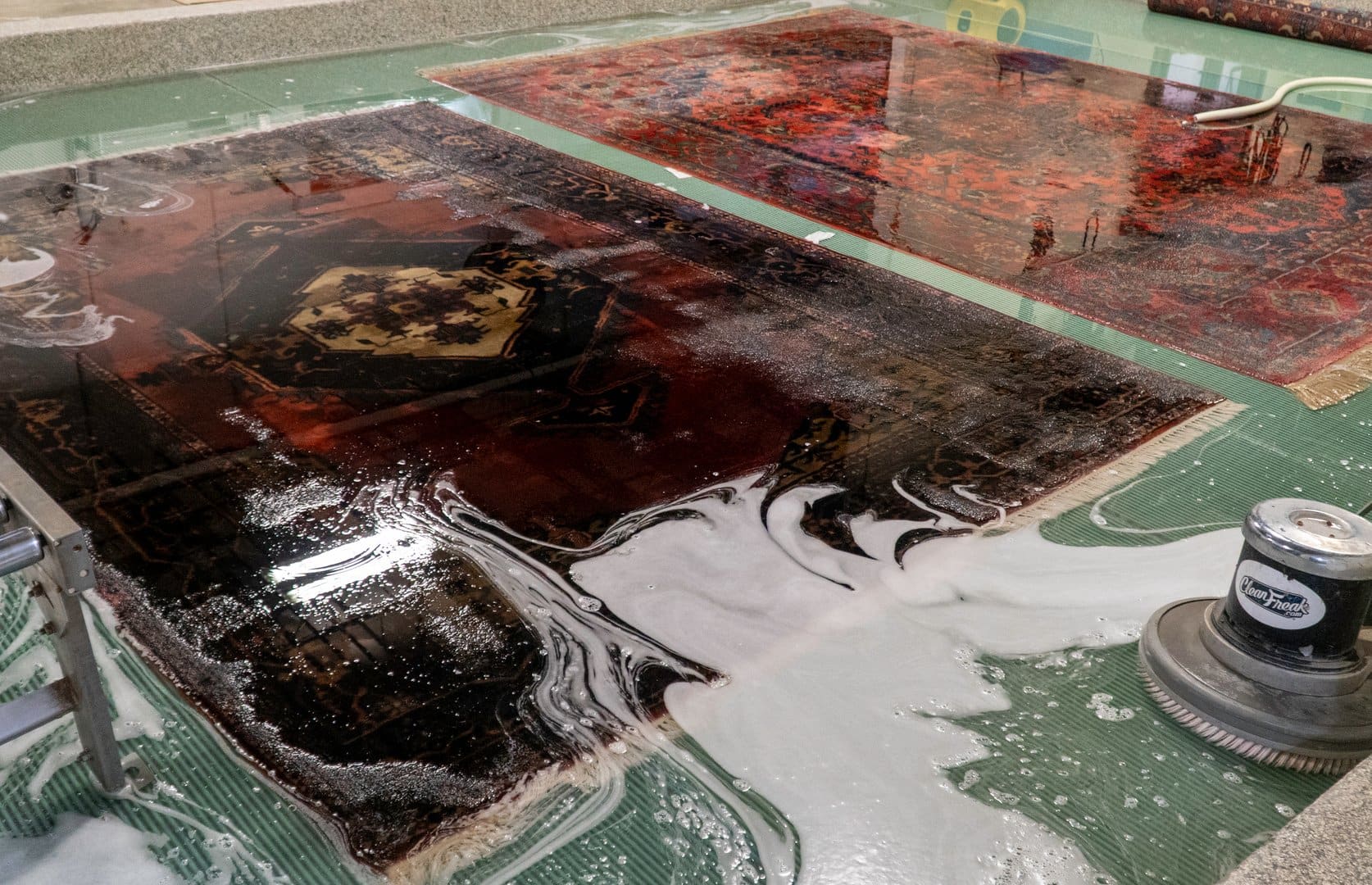
You can see each stage in our 5-step rug cleaning process, which is the same careful approach behind our Oriental and Persian rug cleaning. While a silk rug is in the shop it is also the right time to address worn fringe or open edges through rug repair and restoration, or to add MicroSeal fiber protection, which coats each filament so future spills sit on the surface long enough to blot away.
Vacuum gently, rotate it, keep it out of the sun, and blot spills with a dry white cloth. That is the complete list of what a silk rug owner should do at home — and doing it consistently is worth more than any product on a shelf. Everything past that point risks a rug that cost thousands to buy and cannot be re-woven once the fiber is gone. Silk sits at the higher end of rug cleaning cost in Atlanta for exactly this reason: it is slow, hand-done work.
If your silk rug is due for a wash, or you are not certain what it is made of, request a free quote or call (404) 355-2126. We have cleaned Atlanta's fine rugs for over 30 years, and pickup and delivery is free on rugs 8' x 10' and larger across metro Atlanta.
Common questions about cleaning and caring for silk rugs
Silk is unforgiving, and it is the fiber we are most careful with. We identify it, dye-test it, and wash it by hand — with free pickup and delivery on rugs 8' x 10' and larger in metro Atlanta.

Viscose rug cleaning done wrong causes brown stains and matted pile. Learn safe at-home steps, mistakes to avoid, and when an Atlanta rug needs a pro.
Read MoreHow to clean a jute rug the right way: vacuum dry, blot spills fast, and never steam clean or wash natural fiber rugs. Plus sisal and seagrass care tips.
Read MoreLearn how to clean a shag rug without matting, shedding, or mildew: safe vacuuming, spot cleaning steps, mistakes to avoid, and when to call an Atlanta pro.
Read More